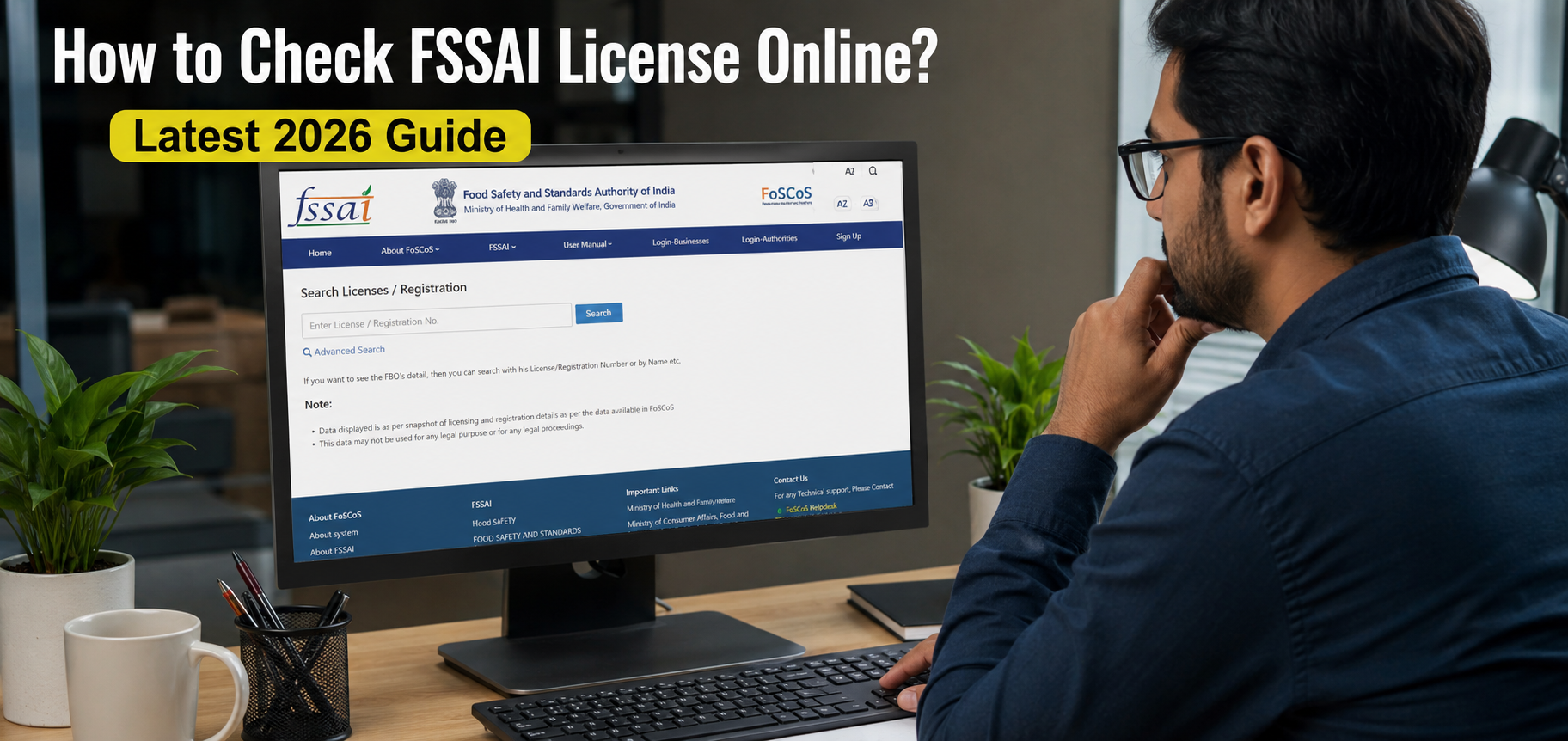
Food safety has become one of the most important concerns for consumers and food business operators in India. Whether you own a restaurant, cloud kitchen, grocery shop, food manufacturing unit, catering service, bakery, dairy business, or home-based food startup, obtaining an FSSAI license is essential for operating legally. Customers are now more aware of food quality standards and often verify food businesses before making purchases. This is why online license verification has become increasingly important.
If you are wondering How to Check FSSAI License Online?, this detailed guide will help you understand the complete process step by step. You will also learn how to verify a food business, check license authenticity, understand the details available on the portal, and avoid fake food licenses.
The Food Safety and Standards Authority of India (FSSAI) provides an online verification system through the FoSCoS portal where anyone can verify a food license number within minutes. This process improves transparency and helps consumers identify genuine food businesses.
What is an FSSAI License?
An FSSAI license is an official certification issued by the Food Safety and Standards Authority of India under the provisions of the Food Safety and Standards Act, 2006. This license is mandatory for businesses involved in the manufacturing, processing, storage, distribution, transportation, or sale of food products in India. The main objective of the FSSAI license is to ensure that food products supplied to consumers are safe, hygienic, and meet the quality standards prescribed by the government.
The Food Safety and Standards Authority of India was established to regulate and supervise food safety across the country. By obtaining an FSSAI license, a food business demonstrates that it follows proper food safety practices, maintains hygiene standards, and complies with legal regulations related to food handling and production. This helps build consumer trust and improves the credibility of the business in the market.
Every food-related business in India, whether small or large, is required to obtain an appropriate FSSAI approval based on the size and nature of its operations. This includes restaurants, hotels, cloud kitchens, food manufacturers, wholesalers, retailers, online food sellers, food importers, exporters, dairy units, bakeries, and home-based food businesses.
There are mainly three types of FSSAI approvals available:
· FSSAI Registration – Suitable for small food businesses, startups, petty retailers, and home-based food operators with low annual turnover.
· State FSSAI License – Required for medium-sized businesses operating within a single state and having turnover beyond the basic registration limit.
· Central FSSAI License – Mandatory for large food businesses, import-export companies, large manufacturers, e-commerce food operators, and businesses operating in multiple states.
The type of FSSAI license required depends on several factors, including:
· Annual business turnover
· Production or processing capacity
· Nature of food products
· Area of operation
· Number of business locations
· Import or export activities
An FSSAI license number generally consists of 14 digits. This unique identification number provides important information about the food business and its registration details. The number helps authorities and consumers identify:
· State in which the business is registered
· Year of registration
· Type and category of food business
· License or registration authority
· Validity and status of the license
Food businesses are required to display the FSSAI license number on food packages, bills, invoices, and business premises. This increases transparency and assures customers that the business operates legally under government-approved food safety standards.
Consumers can also use the FSSAI license number to verify whether a food business is legally registered and compliant with food safety regulations. This verification process helps protect consumers from unsafe, low-quality, or unauthorized food products available in the market.
Obtaining an FSSAI license not only ensures legal compliance but also provides several business advantages, such as improved brand reputation, increased customer confidence, easier business expansion, and better opportunities for partnerships with online marketplaces, restaurants, and retail chains.
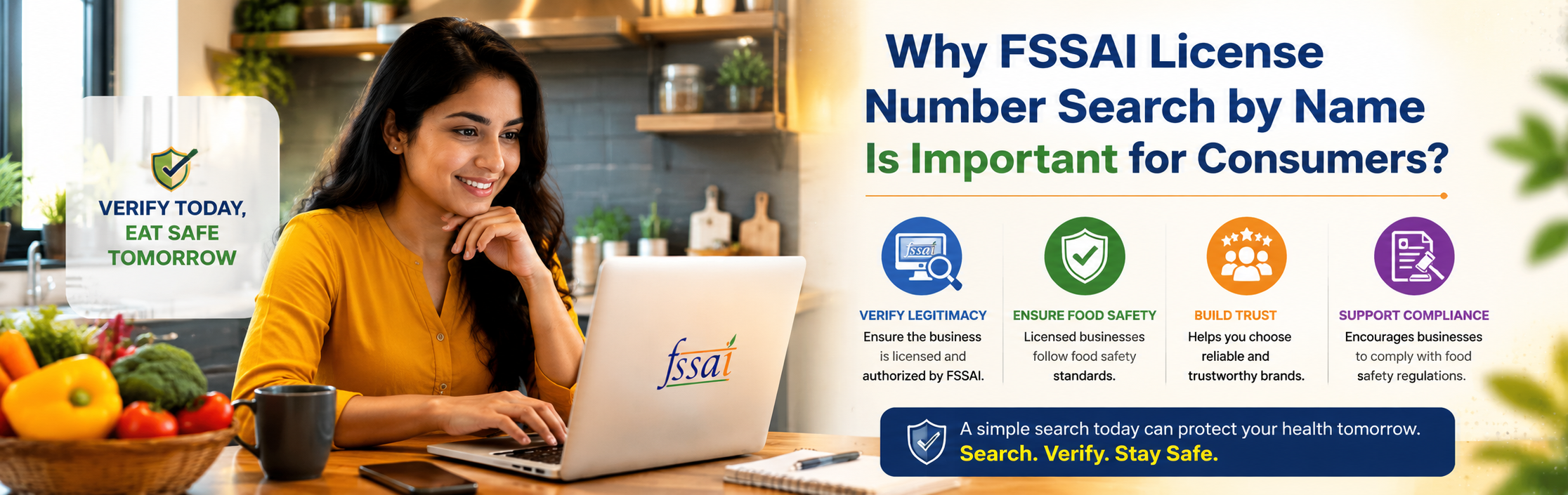
Why FSSAI License Verification is Important?
Online verification helps both consumers and business owners in multiple ways.
Benefits for Consumers
· Confirms whether the food business is genuine
· Helps identify fake food licenses
· Ensures food safety compliance
· Builds trust before ordering food
· Prevents fraud and unsafe food purchases
Benefits for Food Businesses
· Improves customer confidence
· Enhances business credibility
· Supports legal compliance
· Helps during inspections and audits
· Increases brand reputation
How to Check FSSAI License Online?
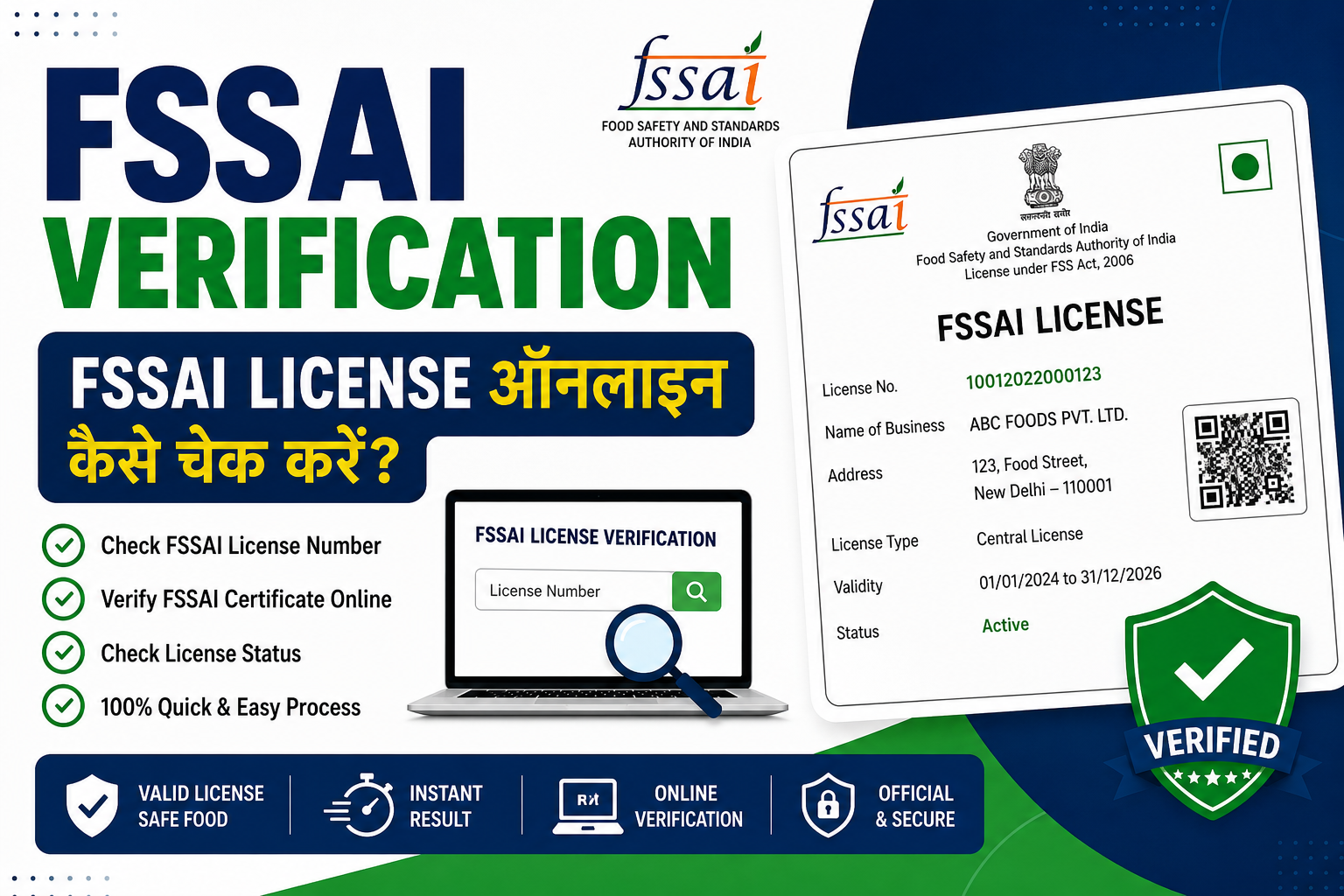
The Government of India has simplified the food license verification process through the FoSCoS portal. Anyone can verify an FSSAI registration number online using a mobile phone or computer.
Follow the steps below carefully.
Step 1: Visit the Official FoSCoS Portal
Open the official FoSCoS website in your browser.
Step 2: Find the License Verification Section
On the homepage, locate the “FBO Search” or “License/Registration Search” option.
Step 3: Enter the 14-Digit License Number
Type the complete FSSAI license number carefully in the search box.
Step 4: Click on Search
After entering the number, click the search button.
Step 5: View License Details
The portal will display complete information related to the food business.
You can check:
· Business name
· License number
· Address
· License type
· Validity status
· Product category
· Registration authority
· License issue date
· Expiry date
This process helps users complete an accurate verification instantly.
FSSAI License Details Check Online
The online FSSAI license verification system allows consumers, distributors, retailers, and business partners to check whether a food business is legally registered and operating under valid food safety regulations. This verification process is mainly conducted through the Food Safety Compliance System (FoSCoS) portal managed by the Food Safety and Standards Authority of India. The portal provides transparency in the food industry and helps consumers identify genuine and government-approved food businesses.
Every licensed or registered food business in India receives a unique 14-digit FSSAI license or registration number. This number is usually printed on food packaging labels, invoices, bills, menus, or displayed at the business premises. Consumers can enter this number on the official FoSCoS portal to verify the authenticity and validity of the food business.
The main objective of the online FSSAI license details check system is to protect consumers from unsafe, fake, unauthorized, or non-compliant food businesses. It also helps ensure that food operators follow proper hygiene standards, food safety practices, and legal compliance under the Food Safety and Standards Act, 2006.
The online verification system provides detailed information related to the food business after entering a valid FSSAI license number. These details help consumers confirm whether the business is officially approved and whether the products being sold are associated with a genuine registered entity.
The FSSAI online license check system may display the following information:
· Registered business name
· Name of the owner or food business operator
· Type and category of food business
· License or registration number
· Current license status
· Registered business address
· Product categories and approvals
· Date of issue of the license
· License validity and expiry period
· Registration or license type
· State or central licensing authority
· Business operational details
The registered business name shown on the portal helps consumers verify whether the company name mentioned on the food product matches the official records maintained by the authority. This reduces the risk of counterfeit or misleading food products in the market.
Owner details available on the portal may include the name of the proprietor, partner, company, or authorized food business operator. This information helps establish accountability and transparency in food business operations.
The business category section identifies the nature of the food business, such as manufacturing, storage, transportation, retail sale, catering, import-export, dairy processing, restaurant services, or online food operations. This helps consumers understand the authorized activities of the business.
The license status is one of the most important details displayed during online verification. It generally shows whether the license is:
· Active
· Valid
· Expired
· Suspended
· Cancelled
Consumers should avoid purchasing products from businesses with expired or cancelled FSSAI licenses, as such businesses may not be legally compliant with food safety regulations.
The registered business address shown on the portal helps confirm the actual location of the food business. Customers can compare this address with the details available on food labels, invoices, websites, or packaging materials to ensure authenticity.
The product approvals section may display the categories of food products approved under the license. This helps determine whether the business is legally permitted to manufacture, distribute, or sell specific food items.
The portal also displays the license validity period, including the issue date and expiry date of the registration or license. Food businesses are required to renew their licenses before expiry to continue operating legally.
The registration type section identifies whether the business has:
· Basic FSSAI Registration
· State FSSAI License
· Central FSSAI License
This classification depends on factors such as annual turnover, production capacity, and business scale.
Consumers should carefully compare all displayed information with the details mentioned on food packaging, restaurant menus, invoices, online listings, or business advertisements. If the information does not match or if the license appears invalid, consumers should avoid purchasing products from that business and may report suspicious activities to the relevant food safety authorities.
The FSSAI online license details check system plays a major role in improving food safety awareness, increasing consumer confidence, and encouraging legal compliance among food business operators across India. It promotes transparency within the food industry and helps consumers make safer and more informed purchasing decisions.
How to Check FSSAI License Number Online?
Many people search for ways to verify a license number directly from packaged food labels or restaurant information.
The easiest method is:
1. Visit the FoSCoS portal
2. Enter the 14-digit number
3. Search the license
4. Verify the displayed information
You can usually find the license number on:
· Food packaging labels
· Restaurant bills
· Delivery apps
· Business websites
· Product containers
· Food shop displays
Always ensure that the number is valid and active before trusting the business.
Check FSSAI License by Number
Consumers can verify any registered food business by simply using the license number. This feature helps users identify whether the business is operating legally.
Before verification, check whether:
· The number contains 14 digits
· The digits are correctly entered
· The business category matches the food product
· The license validity has not expired
If the portal does not display results, the number may be invalid, expired, or fake.
FSSAI Food License Check
Food license verification is important because fake food businesses are increasing across online and offline markets. Customers should verify the food license before buying packaged foods or ordering from unknown restaurants.
A verified food license indicates:
· Legal approval
· Food safety compliance
· Government registration
· Better accountability
· Consumer protection
Food businesses should also display their FSSAI number prominently to build customer trust.
Different Types of FSSAI Licenses
The Food Safety and Standards Authority of India issues different types of FSSAI registrations and licenses based on the size, turnover, production capacity, and operational scale of a food business. Understanding these categories is important for food business operators as well as consumers because it helps determine whether the business is operating under the correct legal approval.
The type of FSSAI license assigned to a business depends on various factors, including annual turnover, nature of business activities, food processing capacity, storage facilities, and geographical area of operation. Selecting the correct category is essential because operating under the wrong license category may lead to penalties, suspension, or cancellation of the registration.
There are mainly three types of FSSAI approvals available in India:
1. Basic FSSAI Registration
Basic FSSAI Registration is the entry-level registration designed for small-scale food businesses and petty food operators. It is suitable for businesses operating on a very small scale with limited production or sales capacity.
This registration is generally applicable to:
· Small food businesses
· Home-based kitchens
· Homemade food sellers
· Petty food retailers
· Small vendors and hawkers
· Temporary food stall operators
· Small grocery shops
· Cottage food industries
· Local snack or bakery businesses
To qualify for Basic FSSAI Registration, the annual turnover of the food business should generally be below ₹12 lakh. Businesses falling under this category are required to obtain a simple registration certificate instead of a full license.
The registration process for Basic FSSAI Registration is comparatively simple and requires fewer documents. Once approved, the business receives a registration number that must be displayed on food packaging, invoices, or at the business premises.
Although this is the lowest level of FSSAI approval, businesses are still required to follow basic food safety, cleanliness, hygiene, and storage standards prescribed by the authority.
Basic FSSAI Registration is highly beneficial for startups and small food entrepreneurs because it helps them operate legally while building customer trust and business credibility.
2. State FSSAI License
The State FSSAI License is issued to medium-sized food businesses operating within a single state. This license is required for businesses whose turnover exceeds the limit for basic registration but does not fall under the central licensing category.
This category generally applies to:
· Medium-sized restaurants
· Food processing units
· Medium-scale manufacturers
· Warehouses and storage units
· Distributors and transporters
· Dairy processing businesses
· Medium-sized catering companies
· Hotels and food service providers
· Retail chains operating within one state
The annual turnover for businesses requiring a State FSSAI License usually falls between ₹12 lakh and ₹20 crore, depending on the type of business and operational activities.
The State FSSAI License is issued by the State Government’s food safety authority. Businesses applying for this license are required to submit additional documents such as identity proof, business registration certificates, address proof, food safety management plans, and details of machinery or production capacity.
This license ensures that medium-scale food businesses maintain proper hygiene standards, food handling practices, storage systems, and quality control measures. It also allows authorities to monitor food businesses more effectively within the state.
Obtaining a State FSSAI License improves the professional image of the business and helps in building consumer confidence, especially for businesses planning to expand their operations in the future.
3. Central FSSAI License
The Central FSSAI License is mandatory for large-scale food businesses and companies involved in high-capacity production, import-export activities, or operations across multiple states.
This license is generally required for:
· Large food manufacturers
· Food importers and exporters
· Multi-state food operators
· E-commerce food businesses
· Large restaurant chains
· Airport and seaport food operators
· Large warehouses and storage facilities
· Businesses supplying food to government institutions
· Companies involved in international food trade
Businesses with annual turnover above ₹20 crore are generally required to obtain a Central FSSAI License. In some cases, certain business activities such as food import, export, or operation in multiple states automatically require central licensing regardless of turnover.
The Central FSSAI License is issued directly by the central authority and involves a more detailed verification process. Applicants may need to provide comprehensive business information, food safety management systems, product details, manufacturing capacity information, and compliance documentation.
This license ensures that large food businesses follow strict food safety standards, quality assurance procedures, and regulatory compliance measures. It is especially important for companies involved in nationwide distribution or international food trade because it helps maintain consistency and reliability in food quality.
Having a Central FSSAI License also improves business reputation and makes it easier for companies to collaborate with large retailers, online marketplaces, export agencies, and international partners.
Common Reasons Why a License May Show Invalid
Sometimes the portal may not display results.
Possible reasons include:
· Incorrect license number
· Expired registration
· Fake license number
· Recently issued license not updated yet
· Technical server issues
In such situations, users should verify the number again carefully.
How to Identify a Fake FSSAI License?
Consumers should always remain careful and alert while purchasing food products or checking the authenticity of food businesses online. In recent years, cases involving fake FSSAI license numbers, duplicate packaging labels, and unauthorized food businesses have increased in many areas. Because of this, verifying the authenticity of an FSSAI license has become extremely important for ensuring food safety and consumer protection.
The Food Safety and Standards Authority of India provides an official online verification system through the FoSCoS portal where consumers can check whether a food business is legally registered or licensed. By verifying the FSSAI license details, consumers can avoid purchasing food products from fake, unauthorized, or non-compliant food operators.
A fake FSSAI license may indicate that the business is operating illegally or not following the required food safety and hygiene standards prescribed under the Food Safety and Standards Act, 2006. Such businesses may sell low-quality, contaminated, adulterated, or unsafe food products that can negatively affect consumer health.
There are several warning signs that may help consumers identify a fake or suspicious FSSAI license.
1. Invalid FSSAI License Number
One of the most common signs of a fake FSSAI license is an invalid or non-existent license number. Every genuine FSSAI registration or license contains a unique 14-digit number issued by the authority.
Consumers should carefully check:
· Whether the number contains exactly 14 digits
· Whether the number exists on the official verification portal
· Whether the number belongs to the same business mentioned on the packaging
If the number cannot be verified online or displays incorrect information, the license may be fake or unauthorized.
2. Mismatch in Business Name
Consumers should compare the business name shown on the food package with the name displayed on the official FSSAI verification portal.
A mismatch may indicate:
· Use of another company’s license number
· Counterfeit packaging
· Unauthorized business operations
· Fake branding or misleading labeling
For example, if the food product label shows one company name but the online portal displays another business entity, consumers should treat the product as suspicious.
3. Expired License Validity
Every FSSAI license has a fixed validity period and must be renewed before expiry. Businesses operating with expired licenses may no longer be legally authorized to manufacture or sell food products.
Consumers should always check:
· License issue date
· Expiry date
· Current license status
If the license status appears as:
· Expired
· Suspended
· Cancelled
· Inactive
then consumers should avoid purchasing products from that business until proper renewal or approval is completed.
4. Missing or Incorrect Address Details
A genuine FSSAI license contains the registered business address of the food operator. Consumers should compare the address mentioned on:
· Food packaging
· Bills or invoices
· Business websites
· Restaurant details
· Online listings
with the address available on the official verification portal.
Warning signs may include:
· Incomplete address information
· Fake or non-existent locations
· Different addresses on packaging and portal records
· No business address mentioned at all
These inconsistencies may indicate fake registration or unauthorized business activity.
5. Incorrect Food Business Category
The FSSAI portal also displays the approved category of the food business, such as:
· Manufacturer
· Retailer
· Restaurant
· Importer
· Exporter
· Distributor
· Storage operator
Consumers should verify whether the business activity matches the approved category shown online.
For example:
· A company selling imported products without import authorization
· A manufacturer operating under a retailer license
· A food processing business using a basic registration meant for small vendors
Such mismatches may indicate regulatory violations or misuse of licensing categories.
6. Fake Labels on Food Packaging
Some unauthorized businesses print fake FSSAI logos or random license numbers on packaging to appear genuine. Consumers should carefully examine the food label for signs of counterfeit packaging.
Common warning signs include:
· Poor print quality
· Missing manufacturer details
· Incorrect FSSAI logo usage
· Incomplete ingredient information
· Spelling mistakes on labels
· Fake-looking registration numbers
· Missing expiry or batch details
Counterfeit packaging is often used to mislead customers and sell low-quality or duplicate food products.
Benefits of Online FSSAI Verification in 2026
The online FSSAI verification system has significantly improved transparency, accountability, and food safety awareness across India. With the increasing use of digital services and online food businesses, consumers now prefer quick and reliable methods to verify whether a food company is legally registered and compliant with government regulations. The digital verification process introduced by the Food Safety and Standards Authority of India has made it easier for consumers, retailers, distributors, and business partners to confirm the authenticity of food businesses within minutes.
In 2026, online verification systems have become an essential part of India’s food safety ecosystem. The Food Safety Compliance System (FoSCoS) portal allows users to check FSSAI registration and license details instantly using the unique 14-digit license number provided to food business operators.
The growing digital infrastructure and increased internet accessibility have made the verification process more convenient, faster, and more effective than traditional manual methods. Consumers can now easily verify food businesses through smartphones, tablets, laptops, or desktop devices without visiting government offices or submitting physical requests.
The online FSSAI verification system offers several important benefits for both consumers and food business operators.
1. Instant Verification of Food Businesses
One of the biggest advantages of online FSSAI verification is the ability to instantly verify whether a food business is legally registered or licensed.
Consumers can quickly check:
· Business registration status
· License validity
· Business category
· Registered address
· Product approvals
· Expiry date of the license
This instant verification process helps users avoid fake or unauthorized food businesses and ensures that food products are purchased only from legally approved operators.
The system saves time and provides immediate access to important information without requiring complex procedures.
2. Easy Access for Consumers
The digital verification system has made food safety information easily accessible to the general public. Earlier, verifying a business license involved manual checks or contacting local authorities, which could be time-consuming and difficult for ordinary consumers.
In 2026, anyone with internet access can verify an FSSAI license online within a few minutes. The system is designed to be simple and user-friendly, allowing even non-technical users to perform verification without difficulty.
Consumers can access the portal from:
· Smartphones
· Tablets
· Laptops
· Desktop computers
This accessibility has increased public participation in food safety awareness and encouraged consumers to make informed purchasing decisions.
3. Reduction in Fraud and Fake Food Businesses
Online verification has played a major role in reducing food-related fraud and counterfeit business operations. Fake food brands and unauthorized businesses often use false claims, duplicate packaging, or invalid FSSAI numbers to mislead consumers.
The online verification system helps consumers identify:
· Fake license numbers
· Expired registrations
· Unauthorized operators
· Incorrect business categories
· Counterfeit packaging details
By allowing customers to cross-check information directly from official records, the system has improved transparency and reduced the chances of food fraud in the market.
This digital monitoring system also discourages illegal businesses from operating without proper authorization.
4. Better Compliance Monitoring
The online FSSAI verification system helps authorities monitor food businesses more efficiently. Since all registration and licensing information is maintained digitally, regulatory agencies can track compliance status in real time.
Authorities can monitor:
· License renewals
· Expiry dates
· Business categories
· Operational activities
· Food safety compliance records
This improves regulatory oversight and helps ensure that food businesses continue following hygiene and safety standards after obtaining registration.
Digital monitoring also simplifies enforcement actions against businesses operating with suspended, expired, or fake licenses.
5. Improved Food Safety Awareness
The availability of online verification tools has significantly increased public awareness about food safety and legal compliance. Consumers are now more conscious about checking FSSAI license details before purchasing food products or ordering food online.
This growing awareness encourages businesses to:
· Maintain proper hygiene standards
· Follow food safety regulations
· Use genuine product labeling
· Improve product quality
As a result, the food industry is becoming more accountable and quality-focused.
Educational campaigns and digital awareness initiatives have further promoted the importance of checking FSSAI registration details before consuming packaged or prepared food items.
6. Enhanced Public Trust in Food Businesses
Transparency in food business operations helps build stronger trust between consumers and food brands. When customers can independently verify a business’s registration status and legal approval, they feel more confident about the quality and safety of the products they purchase.
Food businesses with valid and active FSSAI licenses are generally perceived as:
· More reliable
· More professional
· Safer for consumers
· Legally compliant
· Better regulated
This trust can improve customer loyalty and strengthen the reputation of food businesses in competitive markets.
Documents Required for FSSAI License
Food businesses generally require:
· Aadhaar card
· PAN card
· Address proof
· Passport-size photograph
· Business registration proof
· Food category details
· Premises documents
· NOC if applicable
Requirements may vary depending on the license type.
Importance of FSSAI Number on Food Products
The FSSAI number printed on food packaging plays a very important role in ensuring food safety, product authenticity, and consumer awareness in India. The unique FSSAI registration or license number issued by the Food Safety and Standards Authority of India helps consumers identify whether a food product is manufactured, processed, distributed, or sold by a legally approved food business operator.
Under the Food Safety and Standards Act, 2006, food businesses are required to display their FSSAI registration or license number on packaged food products, labels, invoices, menus, and business premises. This requirement promotes transparency in the food industry and helps consumers make safer and more informed purchasing decisions.
The FSSAI number acts as proof that the food business follows government-approved hygiene practices, food safety regulations, and quality standards. It also helps authorities monitor food businesses and maintain accountability within the food supply chain.
In today’s growing food market, where consumers purchase products from supermarkets, online stores, local vendors, restaurants, and delivery platforms, checking the FSSAI number has become an important habit for ensuring safe food consumption.
Consumers Should Check the Following Details
While purchasing packaged food products, consumers should carefully inspect several important details mentioned on the packaging.
1. FSSAI License or Registration Number
The first thing consumers should verify is the FSSAI license or registration number printed on the product label.
Consumers should check:
· Whether the number is clearly visible
· Whether it contains 14 digits
· Whether it appears genuine and properly printed
· Whether it can be verified online through the official portal
A valid FSSAI number confirms that the manufacturer or seller is registered under food safety regulations.
Consumers can also use the number to verify:
· Business name
· Product category
· License validity
· Registered address
· Legal approval status
This verification process helps avoid fake or unauthorized food products.
2. Manufacturing Date
The manufacturing date is another essential detail consumers should examine before purchasing any food item.
The manufacturing date helps consumers determine:
· Product freshness
· Storage duration
· Shelf life remaining
· Product quality condition
Freshly manufactured food products are generally safer and better in quality compared to products stored for long periods.
Checking the manufacturing date is especially important for:
· Dairy products
· Bakery items
· Packaged snacks
· Frozen foods
· Beverages
· Ready-to-eat meals
Ignoring this detail may increase the risk of consuming stale or deteriorated products.
3. Expiry Date or Best Before Date
Consumers should always check the expiry date or “best before” date mentioned on food packaging.
This information helps determine whether the product is still safe for consumption. Consuming expired food products may lead to:
· Food poisoning
· Stomach infections
· Reduced nutritional quality
· Bad taste or odor
· Health complications
Some businesses may continue selling expired products improperly, so consumers should carefully inspect the packaging before purchasing.
The expiry date is particularly important for:
· Dairy items
· Medicines with food ingredients
· Processed foods
· Baby food products
· Packaged beverages
· Frozen items
Avoid purchasing products with unclear, tampered, or missing expiry information.
4. Product Category and Ingredients
Consumers should also review the product category and ingredient details mentioned on the packaging.
This helps consumers:
· Understand the nature of the food product
· Identify allergens or restricted ingredients
· Verify whether the product matches its labeling claims
· Confirm vegetarian or non-vegetarian classification
Food products often contain additives, preservatives, artificial flavors, or allergens that may affect certain individuals.
Checking the product category is also important for ensuring that the product falls under the correct licensed food category approved by the FSSAI.
5. Packaging Condition
The physical condition of the packaging is another important factor that consumers should never ignore.
Consumers should avoid products with:
· Torn packaging
· Swollen containers
· Leakage
· Broken seals
· Damaged labels
· Moisture exposure
· Signs of tampering
Damaged packaging may indicate contamination, poor storage conditions, or compromised food safety.
Proper packaging helps protect food products from:
· Bacteria
· Moisture
· Air exposure
· Physical damage
· Chemical contamination
Safe packaging is essential for maintaining product quality and hygiene.
How Food Businesses Can Maintain Compliance?
Food businesses in India are required to follow proper food safety regulations, hygiene standards, and licensing requirements under the Food Safety and Standards Act, 2006. Maintaining compliance is extremely important for ensuring consumer safety, building trust, and operating legally in the food industry. The Food Safety and Standards Authority of India regularly monitors food business operators to ensure that food products are manufactured, stored, distributed, and sold under safe and hygienic conditions.
Food business compliance is not limited to obtaining an FSSAI license alone. Businesses must continuously follow food safety practices, maintain sanitation standards, update records, and ensure that all operations comply with government regulations. Failure to maintain compliance can lead to penalties, fines, suspension of licenses, legal action, or even closure of the business.
Whether it is a small food stall, restaurant, bakery, cloud kitchen, manufacturing unit, supermarket, or large food processing company, maintaining proper compliance is essential for long-term business success and customer confidence.
There are several important practices that food businesses should follow to maintain compliance and avoid legal complications.
1. Renew FSSAI Licenses Before Expiry
One of the most important compliance requirements for food businesses is timely renewal of the FSSAI registration or license.
Every FSSAI license has a fixed validity period, and businesses must renew it before the expiry date to continue operating legally. Operating with an expired license may result in:
· Financial penalties
· Suspension of operations
· Legal notices
· Cancellation of the license
· Loss of business credibility
Food business operators should regularly monitor:
· License validity dates
· Renewal deadlines
· Changes in business operations
· Updated regulatory requirements
Applying for renewal in advance helps prevent interruptions in business operations and ensures continuous legal compliance.
2. Maintain Proper Cleanliness and Hygiene Standards
Food hygiene and sanitation are among the most important aspects of food safety compliance. Businesses must maintain clean and hygienic environments to prevent contamination and ensure the safety of food products.
Proper hygiene practices include:
· Regular cleaning of kitchen and storage areas
· Safe handling of raw materials
· Proper waste disposal systems
· Pest control measures
· Sanitization of utensils and equipment
· Clean drinking water usage
· Personal hygiene practices for staff
Poor hygiene can lead to:
· Food contamination
· Food poisoning incidents
· Spread of bacteria and viruses
· Customer complaints
· Regulatory penalties
Maintaining cleanliness standards not only helps businesses comply with regulations but also improves customer trust and brand reputation.
3. Use Proper and Safe Food Packaging
Food packaging plays an important role in protecting products from contamination, damage, and spoilage. Businesses should always use food-grade packaging materials that comply with safety standards.
Proper packaging helps:
· Preserve product quality
· Increase shelf life
· Prevent leakage and contamination
· Protect products during transportation
· Provide accurate product information to consumers
Food businesses should avoid:
· Low-quality packaging materials
· Damaged or reused containers
· Incorrect labeling
· Misleading packaging information
All packaged food products should clearly display:
· FSSAI license number
· Manufacturing date
· Expiry or best-before date
· Ingredient information
· Storage instructions
· Product category
Safe and professional packaging improves both compliance and customer satisfaction.
4. Train Staff in Hygiene and Food Safety Practices
Employees handling food products should receive proper training related to hygiene, sanitation, and food safety procedures.
Staff training should include:
· Handwashing practices
· Safe food handling methods
· Personal hygiene standards
· Use of protective equipment
· Cleaning and sanitization procedures
· Safe storage practices
· Prevention of cross-contamination
Well-trained staff help reduce operational risks and ensure that food products are handled safely throughout the preparation and distribution process.
Businesses should also regularly update staff training programs to comply with changing food safety guidelines and industry standards.
5. Display the FSSAI License Number Clearly
Food business operators are legally required to display their FSSAI registration or license number at business premises and on food packaging materials.
The FSSAI number should be clearly visible on:
· Packaged food labels
· Menus
· Bills and invoices
· Signboards
· Delivery packaging
· Online business listings
Displaying the FSSAI number improves transparency and allows consumers to verify the authenticity of the business.
A clearly displayed license number also demonstrates that the business operates legally and follows government-approved food safety standards.
6. Keep Business Records Updated
Proper documentation and record management are essential for maintaining regulatory compliance.
Food businesses should maintain updated records related to:
· Purchase invoices
· Supplier details
· Inventory management
· Product batch records
· Quality control reports
· Employee training records
· License and registration documents
· Food testing reports
Keeping accurate records helps businesses:
· Respond to inspections efficiently
· Track product quality issues
· Maintain operational transparency
· Resolve customer complaints
· Demonstrate compliance during audits
Digital record management systems are increasingly being used in 2026 to simplify compliance monitoring and improve business efficiency.
7. Follow Safe Food Storage Practices
Improper food storage can cause contamination, spoilage, and health risks. Food businesses should store products under appropriate temperature and environmental conditions.
Safe storage practices include:
· Refrigeration of perishable items
· Separation of raw and cooked foods
· Moisture control
· Proper labeling of stored products
· FIFO (First In, First Out) inventory management
Maintaining correct storage conditions helps preserve food quality and reduces the risk of bacterial growth or spoilage.
8. Conduct Regular Quality Checks
Regular inspection and quality monitoring are important for ensuring compliance with food safety standards.
Businesses should periodically check:
· Product quality
· Ingredient safety
· Storage conditions
· Packaging integrity
· Equipment cleanliness
· Expiry dates
Routine quality checks help identify problems early and reduce the risk of unsafe food reaching consumers.
9. Cooperate with Food Safety Inspections
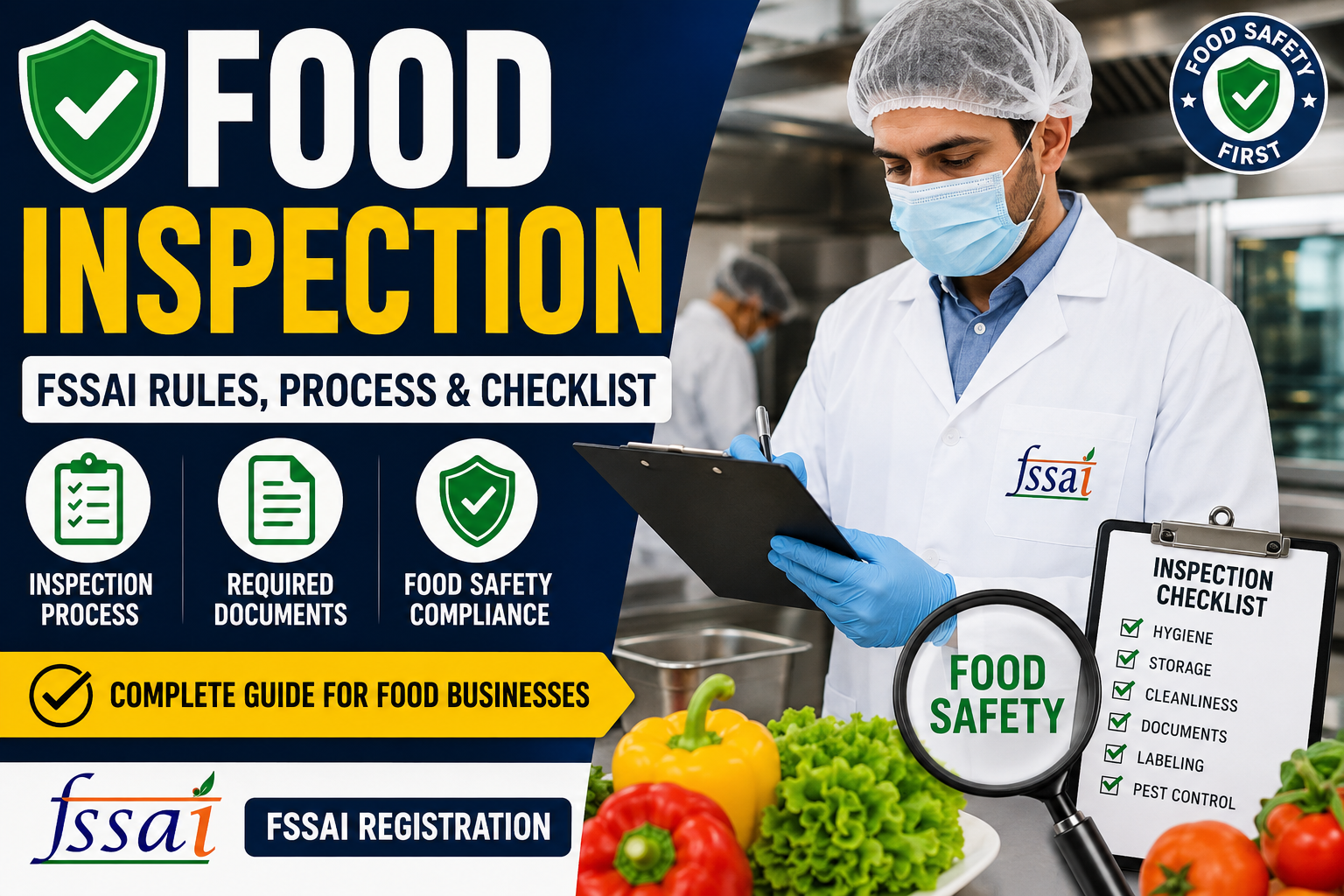
Food safety authorities may conduct inspections to verify compliance with regulations and hygiene standards.
Businesses should:
· Cooperate with inspectors
· Provide required documents
· Address safety concerns promptly
· Correct identified violations immediately
Positive cooperation during inspections helps maintain a good compliance record and reduces legal risks.
10. Stay Updated with Food Safety Regulations
Food safety laws and regulations may change over time. Businesses should regularly stay informed about:
· Updated FSSAI guidelines
· Labeling requirements
· Packaging regulations
· Hygiene standards
· Food testing requirements
Remaining updated helps businesses avoid unintentional violations and maintain smooth operations.
Penalties for Operating Without FSSAI License
Running a food business without proper registration can lead to legal action.
Possible penalties include:
· Monetary fines
· Business closure
· Product seizure
· Legal prosecution
· Suspension of operations
Food businesses should always obtain valid registration before starting operations.
How to Renew an FSSAI License?
License renewal is essential before the expiry date.
Renewal steps include:
1. Login to the FoSCoS portal
2. Select renewal option
3. Update business details
4. Upload required documents
5. Pay renewal fees
6. Submit application
Businesses should apply for renewal at least 30 days before expiry.
Tips for Consumers Before Ordering Food Online
Consumers should verify food businesses before placing orders online.
Important checks include:
· Valid FSSAI number
· Proper packaging
· Hygiene ratings
· Customer reviews
· Business address
· Food quality standards
Online verification helps reduce food safety risks.
Future of Food Safety Verification in India
India is rapidly moving toward digital food safety systems. Advanced verification technologies may soon include:
· QR-based license verification
· AI-driven compliance monitoring
· Real-time inspection updates
· Digital food traceability
· Smart consumer safety systems
These developments will strengthen food safety standards across the country.
Conclusion
Understanding How to Check FSSAI License Online? is essential for both consumers and food business operators in 2026. Online verification helps identify genuine food businesses, improve transparency, and ensure food safety compliance.
The FoSCoS portal has simplified the verification process by allowing users to check license information instantly using a 14-digit number. Consumers should always verify food licenses before purchasing packaged foods or ordering from unfamiliar businesses.
Food businesses must maintain valid registration, renew licenses on time, and follow hygiene standards to build customer trust and avoid legal issues.
Using the official government portal is the safest and most reliable way to verify food business authenticity in India.
FAQs
1. What is an FSSAI license?
An FSSAI license is a government-issued registration that allows food businesses to operate legally in India while following food safety standards.
Source: https://www.fssai.gov.in/
2. How can I verify an FSSAI license online?
You can verify a license by visiting the FoSCoS portal and entering the 14-digit license number.
Source: https://foscos.fssai.gov.in/
3. Where can I find the FSSAI license number?
The number is usually printed on food packaging labels, restaurant bills, or displayed inside food establishments.
Source: https://www.fssai.gov.in/
4. What is the official website for FSSAI verification?
The official verification portal is the FoSCoS website managed by FSSAI.
Source: https://foscos.fssai.gov.in/
5. Is FSSAI registration mandatory for food businesses?
Yes, every food business operator in India must obtain appropriate FSSAI registration or licensing.
Source: https://www.fssai.gov.in/
6. How many digits are there in an FSSAI license number?
An FSSAI license number contains 14 digits.
Source: https://www.fssai.gov.in/
7. Can consumers check food business licenses online?
Yes, any consumer can verify a food business license using the official portal.
Source: https://foscos.fssai.gov.in/
8. What details are shown after verification?
The portal displays business name, address, license validity, and registration details.
Source: https://foscos.fssai.gov.in/
9. What should I do if a license number is invalid?
Recheck the number carefully or contact the food business for clarification.
Source: https://www.fssai.gov.in/
10. Can expired licenses be verified online?
Yes, the portal may show expired status if the license validity has ended.
Source: https://foscos.fssai.gov.in/
11. Is FoSCoS an official government portal?
Yes, FoSCoS is the official food licensing portal managed by FSSAI.
Source: https://foscos.fssai.gov.in/
12. What is the purpose of food license verification?
Verification helps consumers identify genuine and legally registered food businesses.
Source: https://www.fssai.gov.in/
13. Can I check FSSAI license validity online?
Yes, the validity status is available during online verification.
Source: https://foscos.fssai.gov.in/
14. Is FSSAI required for home kitchens?
Yes, home-based food businesses may require basic FSSAI registration.
Source: https://www.fssai.gov.in/
15. What happens if a food business operates without a license?
The business may face penalties, fines, or legal action.
Source: https://www.fssai.gov.in/
16. Can restaurants operate without FSSAI approval?
No, restaurants must obtain valid FSSAI registration before operations.
Source: https://www.fssai.gov.in/
17. How can businesses renew their FSSAI license?
Businesses can renew licenses through the FoSCoS portal.
Source: https://foscos.fssai.gov.in/
18. Is FSSAI verification free?
Yes, consumers can verify food licenses online free of cost.
Source: https://foscos.fssai.gov.in/
19. Why is the FSSAI number printed on food packets?
It helps consumers verify the legal registration of the food business.
Source: https://www.fssai.gov.in/
20. Can online food delivery businesses require FSSAI licenses?
Yes, online food operators must obtain proper licensing.
Source: https://www.fssai.gov.in/
21. What is the difference between registration and license?
Small businesses require registration, while larger businesses need state or central licenses.
Source: https://www.fssai.gov.in/
22. Can imported food products be verified?
Imported food businesses also require FSSAI compliance and licensing.
Source: https://www.fssai.gov.in/
23. Is food safety verification important for consumers?
Yes, it helps consumers avoid unsafe or fake food products.
Source: https://www.fssai.gov.in/
24. How long is an FSSAI license valid?
Licenses are generally valid from 1 to 5 years depending on the application.
Source: https://foscos.fssai.gov.in/
25. Can food startups apply for FSSAI registration?
Yes, startups and small food businesses can apply online.
Source: https://www.startupindia.gov.in/
26. Does a bakery need FSSAI registration?
Yes, bakeries and confectionery businesses require food licensing.
Source: https://www.fssai.gov.in/
27. Can consumers report fake food businesses?
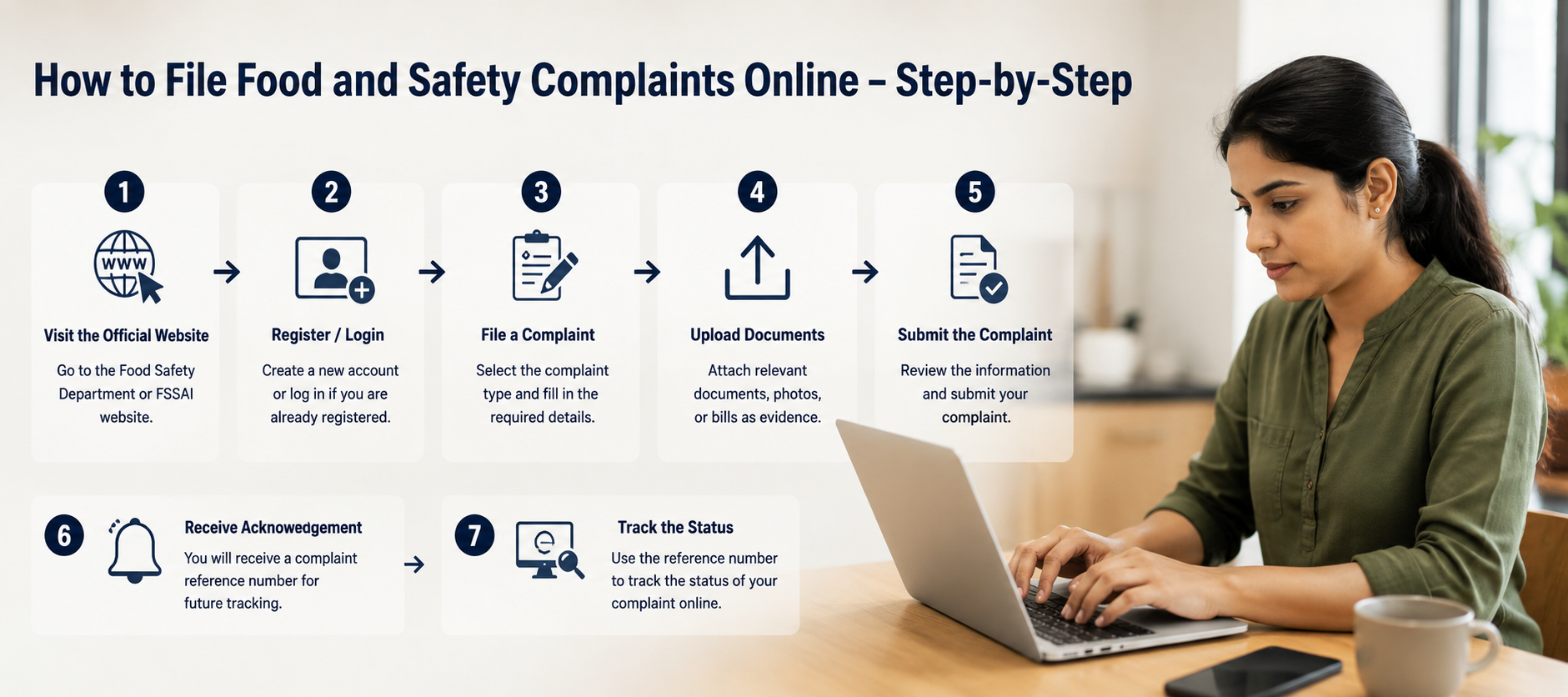
Yes, complaints can be submitted to food safety authorities.
Source: https://www.fssai.gov.in/
28. Is FSSAI mandatory for packaged food sellers?
Yes, packaged food businesses must comply with FSSAI regulations.
Source: https://www.fssai.gov.in/
29. What should consumers check before buying packaged foods?
Consumers should verify the FSSAI number, expiry date, and packaging condition.
Source: https://www.fssai.gov.in/
30. Can mobile users verify food licenses online?
Yes, the FoSCoS portal is accessible through mobile browsers.
Source: https://foscos.fssai.gov.in/