Food quality and hygiene have become major concerns for consumers across India. Whether it is contaminated food, misleading labels, expired products, or unhygienic food preparation practices, consumers have the right to raise concerns through the proper channels. Understanding the process of food and safety complaints can help individuals take prompt action and contribute to a safer food ecosystem. If you need guidance regarding food compliance and regulatory procedures, FSSAI License Agency can help businesses understand food safety requirements and maintain compliance with applicable regulations.
Why Food Safety Matters?
Food safety plays a critical role in protecting public health and ensuring that the food consumed by individuals is safe, nutritious, and free from harmful contaminants. Every consumer expects the food they purchase from restaurants, supermarkets, food stalls, and online delivery platforms to meet established safety standards. However, when food businesses fail to follow proper hygiene and quality control measures, consumers may face serious health risks ranging from mild discomfort to severe illnesses.
Unsafe food can contain harmful bacteria, viruses, parasites, chemicals, or foreign substances that may lead to foodborne diseases, allergic reactions, infections, digestive disorders, and long-term health complications. Vulnerable groups such as children, pregnant women, elderly individuals, and people with weakened immune systems are particularly at risk when exposed to unsafe food products.
Consumers frequently encounter various food safety issues in their daily lives, including:
· Expired food products being sold in retail stores.
· Adulterated food items containing unauthorized or harmful substances.
· Improper food labeling with incorrect ingredient or nutritional information.
· Contaminated packaged food due to poor manufacturing practices.
· Poor hygiene standards in restaurants, cafes, and food outlets.
· Food poisoning incidents caused by contaminated ingredients or improper food handling.
· Unsafe storage conditions that affect food quality and freshness.
· Misleading product information that confuses consumers.
· Presence of foreign objects such as plastic, metal, or insects in food products.
· Food products with damaged or tampered packaging.
· Failure to disclose allergens that may trigger serious allergic reactions.
· Unhygienic food preparation practices in commercial kitchens and street food stalls.
When consumers report such issues, they contribute significantly to the overall food safety system. Complaints help authorities identify non-compliant food businesses, investigate violations, conduct inspections, and take corrective actions against offenders. These actions may include issuing warnings, imposing penalties, suspending licenses, recalling unsafe products, or initiating legal proceedings when necessary.
A strong food safety culture benefits everyone involved in the food supply chain. Consumers receive safer products, responsible businesses gain public trust, and regulatory authorities can effectively monitor and improve food standards across the country. By remaining vigilant and reporting food-related concerns promptly, consumers play an essential role in protecting public health and promoting accountability within the food industry.
Understanding the Food Complaint System in India
India has developed a structured and well-regulated framework for ensuring food safety and protecting consumer health through the Food Safety and Standards Authority of India (Food Safety and Standards Authority of India). This authority plays a central role in maintaining food quality standards, regulating food businesses, and addressing consumer complaints related to unsafe, unhygienic, or substandard food products across the country.
The FSSAI works under the Ministry of Health & Family Welfare and ensures that every stage of the food supply chain—from production and processing to distribution and sale—meets prescribed safety norms. It also monitors violations and takes strict action against businesses that do not comply with food safety regulations. One of its key responsibilities is to provide consumers with a reliable and accessible grievance redressal system so that food-related issues can be reported without delay.
Consumers in India can submit complaints against a wide range of food-related entities. These include restaurants and hotels that serve unhygienic or unsafe meals, street food vendors who may not follow proper hygiene practices, and food manufacturers involved in producing packaged or processed foods. Complaints can also be filed against distributors, retail food stores, online food delivery platforms, and well-known packaged food brands if they are found selling expired, adulterated, or misleading products.
Common issues reported by consumers include food poisoning cases, contamination, poor hygiene in preparation areas, incorrect or missing labeling, use of substandard ingredients, and the sale of expired goods. In many cases, consumers also report misleading advertisements or false nutritional claims that can affect public health.
To make the system more effective and user-friendly, the complaint mechanism has been digitized. Consumers can easily register grievances through online portals, mobile applications, or helpline services. This digital approach helps authorities respond faster, track violations efficiently, and ensure timely action against offenders. It also increases transparency and encourages more people to report food safety concerns without hesitation.
Overall, the food complaint system in India acts as an important safeguard for public health. It empowers consumers, improves accountability among food businesses, and strengthens the overall food safety ecosystem in the country.
Common Reasons for Filing a Food Complaint
Before initiating a complaint, it is important to identify the issue clearly. Some of the most common reasons include:
Food Adulteration
Food products mixed with harmful or unauthorized substances can pose serious health risks.
Examples include:
· Artificial coloring agents
· Chemical contamination
· Diluted food products
· Low-quality ingredients
Expired Products
Selling expired food products violates food safety regulations and can endanger consumers.
Misleading Labeling
Labels should accurately display:
· Ingredients
· Nutritional information
· Manufacturing date
· Expiry date
· Allergen warnings
Food Poisoning Cases
Consumers who experience illness after consuming food may file complaints if they suspect unsafe handling or contamination.
Unhygienic Food Handling
Poor sanitation practices in kitchens, food stalls, and restaurants often lead to consumer complaints.
When Should You Submit a Complaint?
Knowing the right time to file a food safety complaint is very important for protecting your health as well as ensuring that unsafe food practices are addressed quickly by authorities such as the Food Safety and Standards Authority of India (Food Safety and Standards Authority of India). Many consumers ignore small signs of food problems, but timely reporting can prevent larger public health risks and help regulatory bodies take immediate corrective action against violators.
You should strongly consider filing a complaint in any situation where food safety, hygiene, or product authenticity appears to be compromised. One of the most common reasons is when the food appears contaminated. This may include visible dirt, unusual color, foul smell, insect presence, or signs of spoilage that indicate the food is unsafe for consumption. Even slight doubts about freshness should not be ignored, especially in packaged or ready-to-eat items.
Another important situation is when food packaging is damaged, improperly sealed, or appears to have been tampered with. Broken seals, leaking containers, or re-packaged items can indicate possible contamination or adulteration. Such products may no longer meet safety standards and should be reported immediately.
If you experience adverse health effects after consuming a particular food item, such as nausea, vomiting, stomach pain, diarrhea, or allergic reactions, it is a strong indicator that the food may have been unsafe. In such cases, reporting the issue helps authorities trace the source and prevent further incidents affecting other consumers.
You should also file a complaint if you find foreign objects in food, such as hair, plastic, glass pieces, metal fragments, or any other unintended materials. These incidents are serious and may indicate negligence in manufacturing or preparation processes.
Poor hygiene conditions are another major red flag. This includes unclean kitchens, improper handling of food, unwashed utensils, employees not following basic hygiene practices, or food being stored in unsanitary environments. Such conditions significantly increase the risk of contamination and foodborne illnesses.
Inaccurate or misleading product information is also a valid reason to raise a complaint. This includes incorrect labeling of ingredients, missing expiry dates, false nutritional claims, or misleading advertisements that can confuse or mislead consumers.
Additionally, if you notice expired products being sold in shops, restaurants, or online platforms, it should be reported immediately. Selling expired food items is a serious violation and can directly harm consumer health.
Taking prompt action in all these situations is extremely important. Early reporting not only improves the chances of a successful investigation but also helps regulatory authorities take faster action against offenders. It also contributes to building a safer and more transparent food ecosystem for all consumers.
Documents and Evidence Required
When filing a food safety complaint, providing strong and accurate evidence is extremely important. Proper documentation not only strengthens your case but also helps authorities like the Food Safety and Standards Authority of India (Food Safety and Standards Authority of India) verify the issue quickly and take appropriate action against the responsible party. Without sufficient evidence, complaints may take longer to process or may not lead to effective investigation outcomes.
A well-supported complaint increases credibility and allows inspectors to trace the source of contamination, verify violations, and ensure corrective measures are implemented. Therefore, consumers should always try to collect and preserve relevant proof immediately after identifying any food-related issue.
One of the most important pieces of evidence is the purchase receipt. This helps establish where and when the product was bought, and it also confirms transaction details such as store name, date, and price. In cases involving restaurants or food delivery services, the restaurant bill or digital invoice serves the same purpose and is equally important.
Product photographs are highly valuable, especially when they clearly show contamination, spoilage, or visible defects in the food item. Close-up images highlighting the issue can significantly support your claim. Similarly, packaging images help document whether the product was properly sealed, damaged, or tampered with before consumption.
Details like batch number, manufacturing date, and expiry date printed on the packaging are also critical. These details allow authorities to trace the exact production batch and identify whether the issue is isolated or part of a larger safety concern affecting multiple consumers.
In more serious cases, video evidence can be extremely useful. Videos can capture real-time issues such as poor hygiene practices in restaurants, unsafe food handling, or visible contamination that may not be fully represented in photos.
If the complaint involves health-related problems, medical reports become very important. Documents from doctors, hospitals, or diagnostic labs can help establish a direct link between food consumption and adverse health effects such as food poisoning or allergic reactions.
Additionally, product label photographs should clearly show ingredients, nutritional information, certifications, and brand details. This is especially helpful in cases involving misleading labeling or incorrect information about the product.
Consumers are strongly advised to keep both digital and physical copies of all evidence whenever possible. Digital copies can be stored on phones or cloud storage, while physical receipts or packaging can be preserved for official verification if required. Proper documentation ensures that the complaint process is smooth, transparent, and more likely to result in timely action.
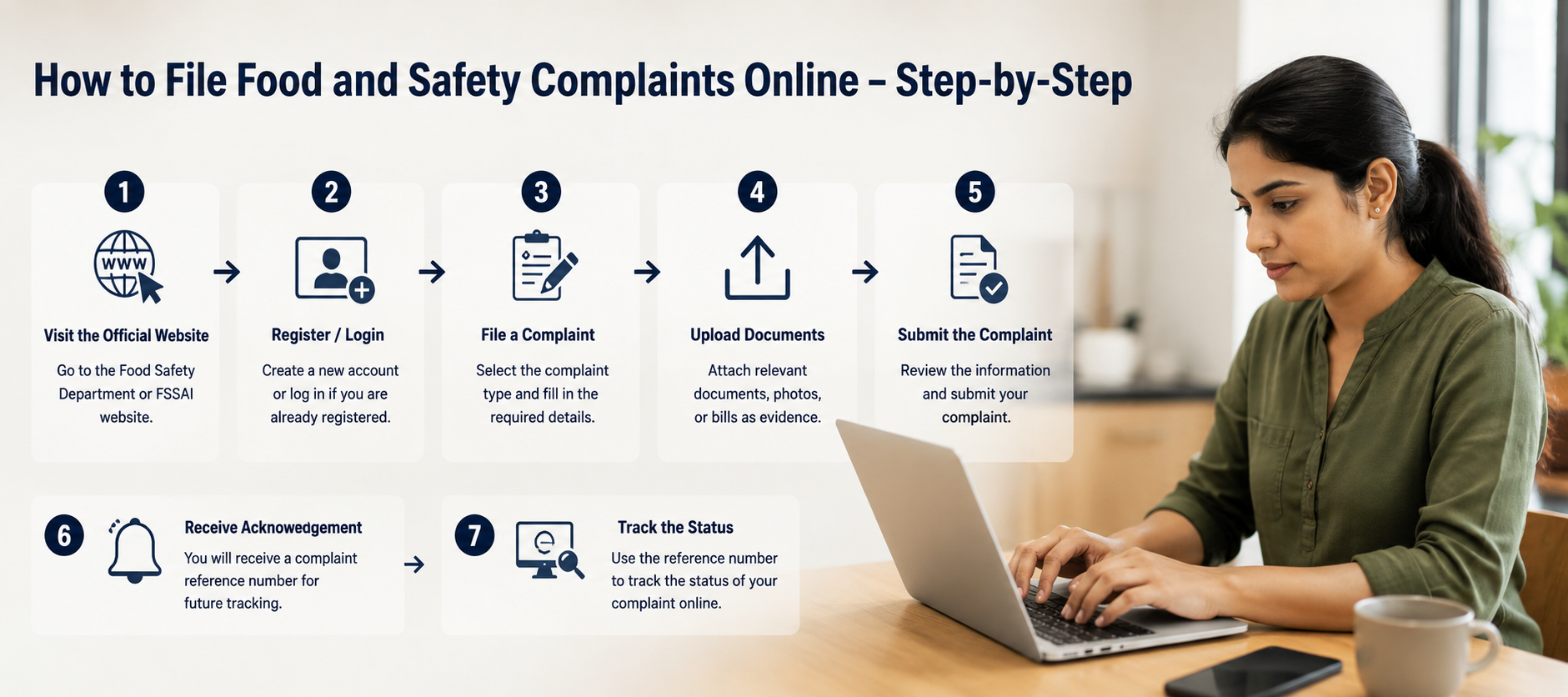
Step 1: Collect Relevant Information
Before filing a complaint, gather all necessary details.
These may include:
· Product name
· Brand name
· Manufacturer details
· Date of purchase
· Place of purchase
· Description of the issue
· Photographic evidence
Accurate information helps authorities investigate efficiently.
Step 2: Verify the Nature of the Issue
Evaluate whether the issue relates to:
· Food quality
· Food contamination
· Misbranding
· Hygiene violations
· Foodborne illness
· Storage problems
Understanding the nature of the complaint ensures it is directed to the appropriate authority.
Step 3: Access the Official Complaint Platform
Consumers can use various official channels provided by food safety authorities.
Available options generally include:
· Online complaint portals
· Mobile applications
· Consumer helplines
· Email grievance systems
· State food safety department portals
Digital platforms have simplified the complaint process significantly.
Step 4: Register Your Complaint
At this stage, consumers can initiate an FSSAI food complaint by entering the required details on the designated platform.
Information typically required includes:
· Personal details
· Contact information
· Complaint category
· Product details
· Incident description
· Supporting documents
Ensure all information entered is accurate and complete.
Step 5: Upload Supporting Evidence
Supporting evidence plays a crucial role in complaint resolution.
Recommended uploads include:
· Product images
· Bills and invoices
· Packaging photographs
· Medical documentation
· Videos showing the issue
Clear evidence improves the credibility of the complaint.
Step 6: Submit the Complaint
Review all information carefully before submission.
Check for:
· Correct product information
· Accurate contact details
· Complete incident description
· Proper document uploads
Once verified, submit the complaint through the portal.
Step 7: Save the Complaint Reference Number
After successful submission, a complaint reference number is usually generated.
This number helps consumers:
· Track complaint progress
· Communicate with authorities
· Request updates
· Verify complaint status
Store the reference number safely.
Step 8: Monitor Complaint Status
Many complaint systems allow users to track their grievances online.
Regular monitoring helps consumers:
· Receive updates
· Respond to additional information requests
· Follow investigation progress
· Understand resolution timelines
Prompt responses can help expedite the process.
Step 9: Cooperate During Investigation
Authorities may contact complainants for additional details.
Be prepared to provide:
· Additional photographs
· Clarifications
· Medical reports
· Product samples
Cooperation improves investigation outcomes.
Step 10: Receive Resolution and Feedback
Once the investigation concludes, authorities may:
· Issue warnings
· Conduct inspections
· Impose penalties
· Suspend licenses
· Initiate legal action
Consumers are often informed regarding the outcome of the complaint.
Benefits of Online Food Complaint Systems
Digital complaint platforms have significantly improved the way food safety issues are reported and handled in India. With the growing reach of technology, authorities such as the Food Safety and Standards Authority of India (Food Safety and Standards Authority of India) have introduced online systems that make it easier for consumers to raise concerns, track complaints, and receive timely responses. These systems play a key role in strengthening transparency, accountability, and public health protection.
Faster Reporting
One of the biggest advantages of online food complaint systems is the speed of reporting. Consumers no longer need to visit offices or rely on lengthy paperwork. Instead, they can submit complaints instantly from their smartphones, tablets, or computers. Whether the issue occurs at a restaurant, grocery store, or with packaged food, users can report it immediately from any location. This quick response capability ensures that food safety issues are addressed before they escalate or affect more people.
Better Documentation
Digital platforms automatically store complaint details, making documentation more organized and reliable. Electronic records help maintain a clear history of complaints, including timestamps, uploaded evidence, and communication logs. This improves transparency and ensures that no complaint is lost or ignored. It also allows authorities to track patterns of violations, identify repeat offenders, and take preventive action more effectively.
Efficient Communication
Online systems make communication between consumers and authorities much more efficient. Investigating officers or food safety departments can quickly reach out to complainants for additional details, clarification, or updates. Notifications, emails, or SMS alerts help keep users informed about the progress of their complaint. This two-way communication reduces delays and improves the overall responsiveness of the grievance redressal system.
Improved Consumer Protection
Another major benefit is stronger consumer protection. When food businesses know that customers can easily report issues online, they are more likely to maintain hygiene standards and follow regulatory guidelines. This accountability encourages restaurants, manufacturers, and vendors to improve their practices. As a result, consumers receive safer food products and better service quality.
Enhanced Public Health
Online complaint systems also contribute significantly to public health improvement. By reporting unsafe food handling practices, contamination cases, or adulterated products, consumers help authorities identify risks early. This proactive reporting reduces the chances of widespread foodborne illnesses and outbreaks. Over time, such systems create a safer food ecosystem that benefits entire communities by ensuring higher safety standards and stronger regulatory enforcement.
Tips for Writing an Effective Complaint
Writing a clear and well-structured complaint is essential when reporting food safety issues to authorities such as the Food Safety and Standards Authority of India (Food Safety and Standards Authority of India). A properly written complaint makes it easier for officials to understand the problem, verify the facts, and take timely action. On the other hand, vague or incomplete complaints may delay the investigation or reduce the chances of effective resolution.
A strong complaint should always be factual and concise. This means you should focus only on what actually happened, without adding unnecessary details or assumptions. Clearly stating the problem helps authorities quickly identify the nature of the violation and decide the next steps for inspection or action.
It is also important to avoid emotional or exaggerated language. While it is natural to feel upset if you encounter unsafe food, complaints written in a calm and professional tone are more effective. Stick to objective descriptions rather than opinions or emotionally charged statements.
Including specific dates, times, and locations is another crucial factor. Mentioning when and where the incident occurred helps investigators trace the source of the problem. For example, details such as the restaurant name, branch location, purchase date, or delivery time can significantly speed up the verification process.
You should always attach supporting evidence whenever possible. This may include photographs, videos, receipts, packaging details, or medical reports. Evidence strengthens your complaint and provides proof that the issue actually occurred, making it easier for authorities to take corrective action.
A good complaint should also clearly describe the issue in detail. Explain what exactly was wrong with the food, such as contamination, poor hygiene, expired product, or foreign objects found. The more precise your description, the easier it becomes for officials to understand the severity of the situation.
If you have experienced any health impacts, such as food poisoning symptoms, allergic reactions, or stomach discomfort, it is important to mention them clearly. This helps authorities assess the seriousness of the complaint and may also assist in identifying public health risks associated with the food product or establishment.
Overall, providing complete and detailed information significantly increases the likelihood of a successful investigation. A well-documented and clearly written complaint not only speeds up the response process but also contributes to stronger enforcement of food safety standards and better protection for all consumers.
Common Mistakes Consumers Should Avoid
While filing a food safety complaint with authorities such as the Food Safety and Standards Authority of India (Food Safety and Standards Authority of India), many consumers unintentionally make mistakes that can delay the investigation or weaken the effectiveness of their complaint. A well-prepared and properly documented complaint is more likely to be processed quickly, whereas incomplete or incorrect submissions may result in unnecessary delays or rejection.
One of the most common mistakes is submitting unclear or low-quality photographs. Blurry images, poorly lit pictures, or photos that do not clearly show the issue make it difficult for authorities to verify the complaint. Clear, high-resolution images that directly highlight the problem are essential for proper assessment.
Another frequent issue is providing inaccurate or incomplete details. Errors in mentioning the restaurant name, product brand, location, or date of purchase can create confusion during the investigation. Even small mistakes can slow down the process, as authorities may need additional time to verify the correct information.
Many consumers also make the mistake of omitting important purchase information, such as receipts, invoices, or order details. Without proof of purchase, it becomes difficult to establish where and when the food item was bought, which is crucial for tracing the source of the issue.
Failing to preserve evidence is another major problem. Once food is consumed or discarded, it becomes harder to support the complaint. Keeping packaging, leftover samples, receipts, and visual proof significantly strengthens the case and helps authorities validate the issue effectively.
Some complaints are also weakened by the use of offensive or emotional language. While frustration is understandable, complaints should remain professional and factual. Emotional or aggressive wording may reduce clarity and make it harder for officials to focus on the actual issue.
Another important mistake is ignoring follow-up communications from authorities. After a complaint is submitted, officials may request additional information, clarification, or supporting documents. Delayed or no response from the complainant can slow down or even halt the investigation process.
Overall, proper preparation, accurate information, and timely cooperation are essential for ensuring that food safety complaints are handled efficiently. Avoiding these common mistakes not only improves the chances of a successful resolution but also helps strengthen the overall consumer grievance system.
Consumer Rights Related to Food Safety
Consumers in India are protected under a strong legal and regulatory framework that ensures access to safe, hygienic, and properly labeled food products. Authorities such as the Food Safety and Standards Authority of India (Food Safety and Standards Authority of India) play a major role in enforcing these protections and ensuring that food businesses follow strict safety and quality standards. Understanding consumer rights is essential because it empowers individuals to identify violations and take appropriate action when food safety is compromised.
One of the most fundamental rights is the right to safe food. Every consumer has the right to receive food that is free from contamination, adulteration, and harmful substances. This includes protection against expired products, unhygienic preparation, and unsafe ingredients that may pose health risks. Food businesses are legally required to ensure that the food they sell meets safety standards before it reaches consumers.
Another important right is the right to accurate information. Consumers must be provided with clear and truthful details about the food they purchase. This includes proper labeling of ingredients, manufacturing and expiry dates, nutritional information, allergen warnings, and certifications. Misleading advertisements or false claims about health benefits are violations of this right and can be challenged through proper complaint channels.
The right to quality products ensures that consumers receive food items that meet acceptable standards of freshness, hygiene, and overall quality. Whether it is packaged food, restaurant meals, or street food, consumers are entitled to products that are fit for consumption and prepared under safe conditions. Substandard or poor-quality food that does not meet regulatory norms can be reported for action.
Consumers also have the right to seek redressal in case of grievances. If a person encounters unsafe food, contamination, or any violation of food safety standards, they can file complaints through official channels. These grievance mechanisms are designed to investigate issues, hold responsible parties accountable, and provide corrective solutions such as penalties, warnings, or product recalls.
In addition, the right to consumer protection ensures that individuals are safeguarded against unfair trade practices and unsafe food operations. Regulatory authorities monitor food businesses and take strict action against those violating safety laws, thereby protecting the broader public from potential harm.
Awareness of these rights is extremely important because it empowers consumers to make informed decisions and take timely action when necessary. When consumers understand their rights, they are more likely to report violations, demand accountability, and contribute to a safer and more transparent food ecosystem.
How Businesses Can Prevent Complaints?
Food businesses should prioritize compliance and quality control.
Recommended practices include:
Staff Training
Employees should receive regular food safety training.
Proper Storage
Food products must be stored according to safety guidelines.
Quality Monitoring
Routine inspections help identify issues before they affect consumers.
Accurate Labeling
All information on packaging should be truthful and compliant.
Hygiene Management
Maintaining clean facilities reduces contamination risks.
The Role of Technology in Food Safety
Modern technology has significantly transformed the way food safety is monitored, managed, and enforced across the entire food supply chain. With increasing demand for safer and higher-quality food, both regulatory bodies and food businesses are adopting advanced digital tools to reduce risks, improve efficiency, and ensure compliance with safety standards set by authorities such as the Food Safety and Standards Authority of India (Food Safety and Standards Authority of India).
One of the most widely used innovations is digital inspection systems. These systems allow food safety officers to conduct inspections using mobile applications and online platforms, replacing traditional paper-based processes. This helps in faster reporting, real-time data entry, and better monitoring of hygiene standards in restaurants, manufacturing units, and retail outlets. Digital inspections also improve transparency and reduce the chances of manual errors.
Inventory management tools are another important technological advancement. These systems help food businesses track stock levels, monitor expiry dates, and manage storage conditions efficiently. By maintaining accurate inventory records, businesses can reduce food wastage, prevent the sale of expired products, and ensure that only fresh and safe items reach consumers.
Traceability solutions play a crucial role in identifying the origin and movement of food products throughout the supply chain. These systems allow authorities and businesses to track a product from farm to fork, ensuring that any contamination or safety issue can be traced back to its source quickly. This is especially important during food recalls or contamination outbreaks, as it helps isolate affected batches and protect public health.
In addition, temperature monitoring devices are widely used in cold storage facilities, transportation vehicles, and food processing units. Maintaining proper temperature is essential for preserving food quality and preventing bacterial growth. These devices continuously monitor temperature conditions and send alerts if there are any deviations, ensuring that perishable goods remain safe during storage and transport.
Quality assurance software is also becoming increasingly important in modern food safety management. These tools help businesses conduct internal audits, maintain compliance records, and ensure that all safety protocols are being followed. They also assist in generating reports, identifying risks, and improving overall operational standards.
Overall, the integration of advanced technologies has greatly improved food safety systems by making them more efficient, transparent, and reliable. These innovations not only help businesses maintain compliance but also reduce the likelihood of contamination and foodborne illnesses. As technology continues to evolve, it will play an even greater role in strengthening food safety standards and protecting consumer health in the future.
Importance of Reporting Unsafe Food
Every consumer complaint contributes to a stronger food safety system.
When individuals Report unsafe food, authorities gain valuable information that can:
· Prevent public health incidents
· Identify recurring violations
· Improve regulatory enforcement
· Protect other consumers
· Enhance industry standards
Consumer participation remains a critical component of food safety governance.
Digital Transformation of Consumer Grievance Systems
The rise of digital services has made Food safety complaint online procedures more accessible than ever before. Consumers no longer need to visit government offices physically to report issues.
Modern systems provide:
· Online submission options
· Real-time tracking
· Faster communication
· Improved transparency
· Digital documentation
These advancements have significantly improved the efficiency of complaint handling.
Awareness Creates Safer Food Environments
Many consumers are unaware of How to file a food safety complaint online, which often results in violations going unreported. Public awareness campaigns, consumer education programs, and accessible digital platforms encourage greater participation in food safety monitoring.
An informed consumer base helps create:
· Safer food businesses
· Better regulatory compliance
· Higher industry standards
· Improved public confidence
Conclusion
Consumer vigilance plays a significant role in maintaining food quality and public health standards. By understanding the complaint process, collecting proper evidence, and following the correct reporting procedures, individuals can help authorities address violations effectively. Whether the concern involves contamination, adulteration, poor hygiene, or misleading labeling, timely reporting contributes to a safer food environment for everyone. For businesses seeking guidance on regulatory compliance, licensing support, and food safety requirements, FSSAI License Agency can provide professional assistance in navigating food sector regulations while promoting responsible food practices.
FAQs
1. What is a food safety complaint?
A food safety complaint is a report submitted by a consumer regarding unsafe, contaminated, adulterated, expired, or unhygienic food products or practices.
Source: https://www.fssai.gov.in/
2. Who can file a food safety complaint in India?
Any consumer who encounters food quality or safety issues can file a complaint with the concerned authorities.
Source: https://www.fssai.gov.in/
3. How can I file a food safety complaint online?
You can submit a complaint through the official Food Safety Connect platform or other approved grievance channels provided by food safety authorities.
Source: https://www.fssai.gov.in/
4. What details are required to submit a complaint?
You may need product details, purchase information, complaint description, photographs, and contact information.
Source: https://www.fssai.gov.in/
5. Can I complain about expired food products?
Yes, consumers can report food products that are sold beyond their expiry date.
Source: https://www.fssai.gov.in/
6. What should I do if I find a foreign object in food?
Preserve the product, take photographs, and submit a complaint with supporting evidence.
Source: https://www.fssai.gov.in/
7. Can I report food adulteration?
Yes, food adulteration can be reported to food safety authorities for investigation.
Source: https://www.fssai.gov.in/
8. Is there any fee for filing a food complaint?
No, consumers can generally submit food safety complaints without paying any fee.
Source: https://www.fssai.gov.in/
9. Can I complain against a restaurant?
Yes, complaints can be filed against restaurants for hygiene issues, unsafe food, or food safety violations.
Source: https://www.fssai.gov.in/
10. What evidence should I keep before filing a complaint?
Keep bills, receipts, photographs, videos, product packaging, and medical records if applicable.
Source: https://www.fssai.gov.in/
11. Can I report food poisoning incidents?
Yes, suspected food poisoning cases can be reported along with relevant medical information.
Source: https://www.fssai.gov.in/
12. What happens after a complaint is submitted?
Authorities may review the complaint, conduct inspections, and take corrective action if violations are found.
Source: https://www.fssai.gov.in/
13. Can I track my complaint status?
Yes, many complaint systems provide a reference number for status tracking.
Source: https://www.fssai.gov.in/
14. How long does complaint resolution take?
The resolution period depends on the nature and complexity of the complaint.
Source: https://www.fssai.gov.in/
15. Can complaints be filed against packaged food brands?
Yes, consumers can report issues related to packaged food products.
Source: https://www.fssai.gov.in/
16. What is food adulteration?
Food adulteration refers to the addition of inferior, harmful, or unauthorized substances to food products.
Source: https://www.fssai.gov.in/
17. Can I report misleading food labels?
Yes, incorrect or misleading labeling information can be reported to the authorities.
Source: https://www.fssai.gov.in/
18. What rights do consumers have regarding food safety?
Consumers have the right to safe food, accurate information, and grievance redressal.
Source: https://consumeraffairs.nic.in/
19. Can online food delivery issues be reported?
Yes, complaints related to food quality and safety in online deliveries can be reported.
Source: https://www.fssai.gov.in/
20. What should I do if food causes an allergic reaction?
Seek medical assistance immediately and preserve the product for investigation.
Source: https://www.fssai.gov.in/
21. Can street food vendors be reported for hygiene violations?
Yes, consumers can report unhygienic conditions observed at food stalls and street food outlets.
Source: https://www.fssai.gov.in/
22. Why is food safety important?
Food safety helps prevent foodborne illnesses and protects public health.
Source: https://www.fssai.gov.in/
23. Can businesses face penalties for food safety violations?
Yes, authorities may impose penalties or take regulatory action against violators.
Source: https://www.fssai.gov.in/
24. What is the role of FSSAI in food safety?
FSSAI regulates food standards, licensing, compliance, and food safety enforcement in India.
Source: https://www.fssai.gov.in/
25. Can complaints be filed anonymously?
Certain complaint channels may allow anonymous reporting depending on the circumstances.
Source: https://www.fssai.gov.in/
26. What should I do if I suspect food contamination?
Avoid consuming the product, preserve evidence, and report the issue immediately.
Source: https://www.fssai.gov.in/
27. How can consumers help improve food safety?
Consumers can report violations, stay informed, and follow safe food handling practices.
Source: https://www.fssai.gov.in/
28. Can complaints be filed for unhygienic food preparation areas?
Yes, poor sanitation and hygiene practices can be reported to food safety authorities.
Source: https://www.fssai.gov.in/
29. What documents strengthen a food complaint?
Purchase receipts, photographs, packaging details, and medical records help support complaints.
Source: https://www.fssai.gov.in/
30. Where can I learn more about food safety regulations?
Consumers can access official food safety information through government food safety portals.
Source: https://www.fssai.gov.in/ and https://msme.gov.in/