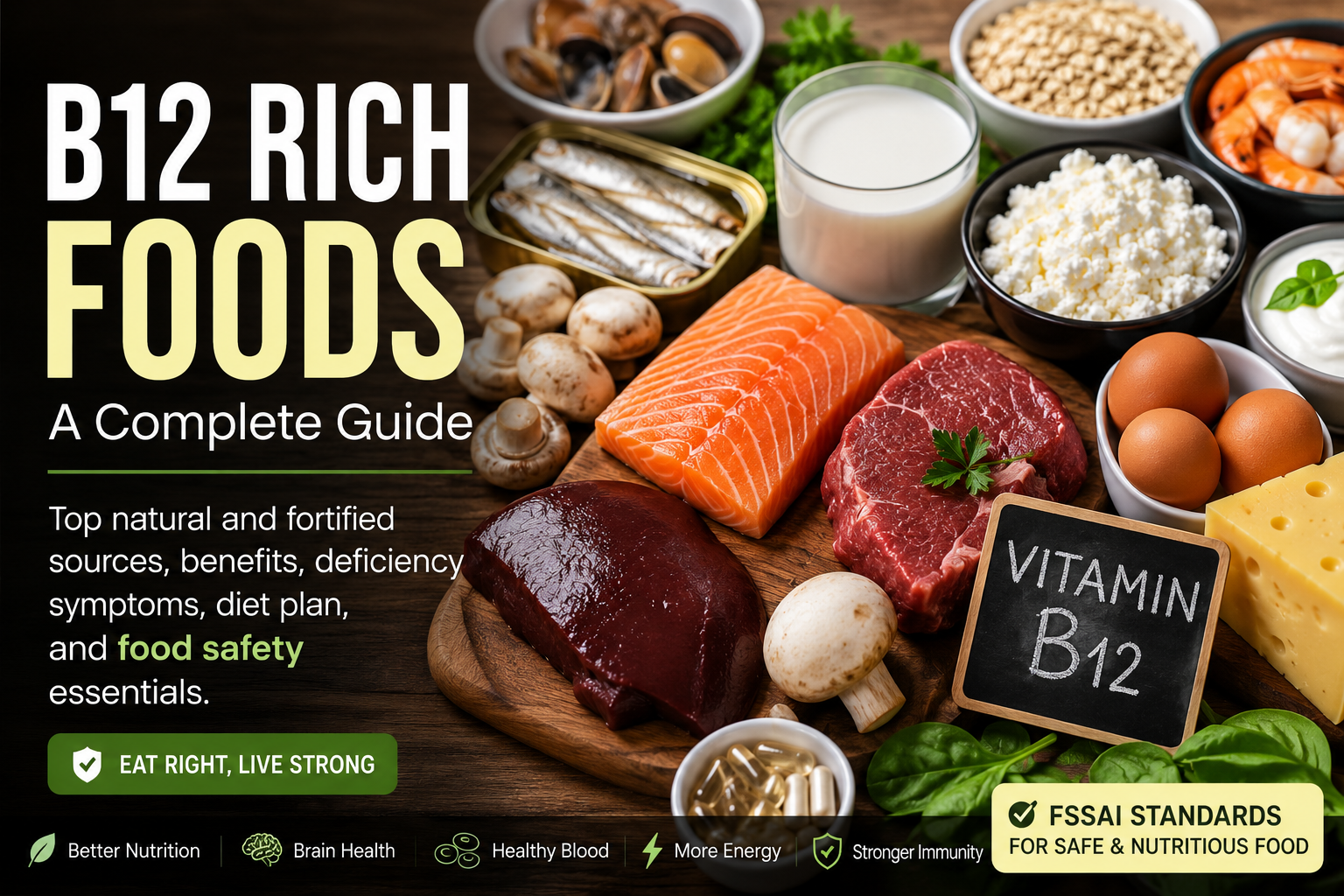
Vitamin B12 is an essential nutrient that plays a crucial role in maintaining healthy nerve cells, producing red blood cells, and supporting DNA synthesis. Since the human body cannot produce Vitamin B12 naturally, it must be obtained through food sources or fortified products.
A deficiency of Vitamin B12 can lead to fatigue, weakness, memory problems, anemia, and neurological disorders. Therefore, including B12 rich foods in your daily diet is essential for overall health and well-being.
In this guide, we will explore the best vitamin B12 rich foods, vegetarian and non-vegetarian sources, fortified foods, and the importance of food licence and food safety standards regulated by FSSAI.
What Are B12 Rich Foods?
B12 rich foods are foods that contain Vitamin B12 (Cobalamin), an essential nutrient that helps produce red blood cells, supports nerve function, and maintains overall health. Since the body cannot make Vitamin B12 on its own, it must be obtained through food.
Common foods high in Vitamin B12 include fish, meat, eggs, milk, yogurt, cheese, and fortified cereals. For vegetarians and vegans, fortified foods and supplements can help meet daily Vitamin B12 requirements. Regular consumption of B12-rich foods can help prevent deficiency and support healthy energy levels and brain function.
Why Is Vitamin B12 Important for the Human Body?
Vitamin B12 is a crucial nutrient that helps keep the body healthy and functioning properly. It plays an important role in the production of red blood cells, supports brain and nervous system health, and helps the body convert food into energy. Consuming B12 rich foods regularly can help prevent fatigue, weakness, and Vitamin B12 deficiency.
Foods high in Vitamin B12 are also essential for DNA synthesis, cognitive function, and maintaining healthy nerve cells. A lack of Vitamin B12 may lead to anemia, memory issues, tingling sensations, and reduced energy levels. Therefore, including vitamin B12 rich foods, foods containing vitamin B12, and good sources of vitamin B12 in your diet is important for overall health and wellness.
Daily Recommended Intake of Vitamin B12
The daily requirement of Vitamin B12 varies based on age, gender, and life stage. Getting the right amount of Vitamin B12 through B12 rich foods and foods high in Vitamin B12 is essential for maintaining healthy blood cells, nerve function, and energy levels.
|
Age Group |
Recommended Daily Intake (RDI) |
|
Infants (0–12 months) |
0.4–0.5 mcg |
|
Children (1–8 years) |
0.9–1.2 mcg |
|
Children (9–13 years) |
1.8 mcg |
|
Teens & Adults |
2.4 mcg |
|
Pregnant Women |
2.6 mcg |
|
Breastfeeding Women |
2.8 mcg |
Including vitamin B12 rich foods, foods containing vitamin B12, and good sources of vitamin B12 in your daily diet can help meet these requirements naturally. People following vegetarian or vegan diets may need to rely on vitamin B12 fortified foods or supplements to maintain adequate Vitamin B12 levels.
Top 20 B12 Rich Foods You Should Include in Your Diet
Adding B12 rich foods to your daily diet is essential for maintaining healthy nerve function, red blood cell production, and overall well-being. Whether you are looking for foods high in Vitamin B12, Vitamin B12 sources for vegetarians, or B12 rich Indian foods, the following options can help you meet your daily nutritional needs.
|
B12 Rich Food |
Vitamin B12 Content (Approx.) |
|
Clams |
84 mcg per 100g |
|
Beef Liver |
70 mcg per 100g |
|
Oysters |
16 mcg per 100g |
|
Sardines |
8.9 mcg per 100g |
|
Tuna |
10 mcg per 100g |
|
Salmon |
3.2 mcg per 100g |
|
Trout |
7.5 mcg per 100g |
|
Mackerel |
19 mcg per 100g |
|
Crab |
11.5 mcg per 100g |
|
Shrimp |
1.1 mcg per 100g |
|
Chicken |
0.3 mcg per 100g |
|
Mutton |
2.6 mcg per 100g |
|
Eggs |
1.1 mcg per 100g |
|
Milk |
0.5 mcg per cup |
|
Yogurt |
1.3 mcg per cup |
|
Cheese |
1.0 mcg per 100g |
|
Paneer |
0.8 mcg per 100g |
|
Fortified Breakfast Cereals |
Varies by brand |
|
Fortified Plant-Based Milk |
Varies by brand |
|
Nutritional Yeast (Fortified) |
Varies by brand |
These foods containing Vitamin B12 are among the best sources of this essential nutrient. While fish, meat, dairy products, and eggs are natural sources of Vitamin B12, vegetarians and vegans can choose Vitamin B12 fortified foods such as cereals, nutritional yeast, and plant-based milk to meet their daily requirements.
Regularly consuming a variety of foods high in B12, B12 food sources, and good sources of Vitamin B12 can help prevent Vitamin B12 deficiency and support long-term health.
Foods High in Vitamin B12 for Non-Vegetarians
Non-vegetarian foods are among the best natural sources of Vitamin B12 and can easily help meet daily nutritional requirements. These foods high in Vitamin B12 support red blood cell production, nerve function, brain health, and energy metabolism.
Some of the best B12 rich foods for non-vegetarians include:
- Clams – One of the richest sources of Vitamin B12.
- Beef Liver – Packed with Vitamin B12, iron, and other essential nutrients.
- Oysters – A nutrient-dense seafood rich in Vitamin B12.
- Sardines – High in Vitamin B12, protein, and omega-3 fatty acids.
- Tuna – A popular fish that provides a good amount of Vitamin B12.
- Salmon – Rich in Vitamin B12 and heart-healthy fats.
- Mackerel – One of the best fish-based sources of Vitamin B12.
- Crab – Contains Vitamin B12 along with high-quality protein.
- Shrimp – A low-calorie seafood option with Vitamin B12.
- Chicken – Provides moderate amounts of Vitamin B12 and protein.
- Mutton – A good source of Vitamin B12, iron, and zinc.
- Eggs – An affordable and nutritious source of Vitamin B12.
Including these foods containing Vitamin B12 in your diet can help prevent Vitamin B12 deficiency and support overall health. For individuals who consume animal-based foods regularly, meeting the recommended daily intake of Vitamin B12 is usually easier through a balanced diet rich in fish, meat, eggs, and dairy products.
Vitamin B12 Sources for Vegetarians
Finding reliable Vitamin B12 sources for vegetarians can be challenging because Vitamin B12 is naturally found mainly in animal-based foods. However, vegetarians can still meet their daily requirements by including dairy products, eggs, and fortified foods in their diet.
Some of the best Vitamin B12 rich foods vegetarian options include:
- Milk – A good source of Vitamin B12 and calcium.
- Yogurt (Curd) – Contains Vitamin B12 along with beneficial probiotics.
- Paneer – A popular vegetarian food that provides Vitamin B12 and protein.
- Cheese – Offers moderate amounts of Vitamin B12.
- Eggs – One of the best vegetarian-friendly sources of Vitamin B12.
- Fortified Breakfast Cereals – Enriched with Vitamin B12 and other nutrients.
- Fortified Soy Milk – A suitable option for vegetarians and vegans.
- Fortified Almond Milk – Often fortified with Vitamin B12.
- Nutritional Yeast – A popular source of Vitamin B12 for plant-based diets.
- Fortified Tofu – Can help increase Vitamin B12 intake.
Including these B12 rich foods vegetarian, B12 food sources, and good sources of Vitamin B12 in your daily diet can help maintain healthy Vitamin B12 levels. People who follow a strict vegetarian diet should pay special attention to their intake and may consider fortified foods or supplements if recommended by a healthcare professional.
Vitamin B12 Fortified Foods for Vegans
Since natural Vitamin B12 sources are primarily found in animal-based foods, vegans often rely on Vitamin B12 fortified foods to meet their daily nutritional needs. These fortified products are enriched with Vitamin B12 and can help prevent deficiency while supporting overall health.
Some of the best vegan foods high in B12 include:
- Fortified Breakfast Cereals – One of the most common sources of added Vitamin B12.
- Fortified Soy Milk – A popular dairy-free alternative enriched with Vitamin B12.
- Fortified Almond Milk – Provides Vitamin B12 along with other essential nutrients.
- Fortified Oat Milk – An excellent plant-based option for vegans.
- Nutritional Yeast – A widely used vegan ingredient rich in fortified Vitamin B12.
- Fortified Tofu – Can contribute to daily Vitamin B12 intake.
- Plant-Based Yogurts – Some brands are fortified with Vitamin B12.
- Fortified Meat Alternatives – Vegan burgers, sausages, and other products may contain added Vitamin B12.
Including these B12 enriched foods, B12 food sources for vegans, and foods containing Vitamin B12 can help vegans maintain adequate Vitamin B12 levels. When choosing fortified products, always check the nutrition label to ensure they provide sufficient Vitamin B12 as part of a balanced and healthy diet.
Can Fruits and Vegetables Provide Vitamin B12?
Many people search for vitamin B12 vegetables and fruits, fruits rich in Vitamin B12, and vegetables high in B12. However, it is important to know that most fruits and vegetables do not naturally contain significant amounts of Vitamin B12.
Vitamin B12 is primarily found in animal-based foods such as meat, fish, eggs, milk, and dairy products. Therefore, relying solely on fruits and vegetables may not be enough to meet your daily Vitamin B12 requirements.
While fruits and vegetables are not considered major B12 rich foods, they are packed with other essential nutrients such as fiber, antioxidants, vitamins, and minerals that support overall health. Foods like spinach, broccoli, beetroot, oranges, bananas, and avocados can complement a healthy diet but should not be considered primary sources of Vitamin B12.
For vegetarians and vegans, the best way to maintain adequate Vitamin B12 levels is by consuming Vitamin B12 fortified foods, including fortified cereals, plant-based milk, nutritional yeast, and other enriched products. Including these foods containing Vitamin B12 can help prevent deficiency and support long-term health.
B12 Rich Indian Foods and Traditional Sources
India offers several nutritious foods that can help increase Vitamin B12 intake. While most natural B12 rich Indian foods are animal-based, vegetarians can obtain Vitamin B12 through dairy products and fortified foods.
Some popular B12 rich foods Indian consumers commonly include in their diet are:
- Milk
- Curd (Yogurt)
- Paneer
- Cheese
- Buttermilk
- Eggs
- Fish
- Chicken
- Mutton
- Fortified Breakfast Cereals
These foods containing Vitamin B12 can help support healthy nerve function, red blood cell production, and overall well-being. Including a variety of these foods in your daily meals can help maintain adequate Vitamin B12 levels.
B12 Rich Dry Fruits and Nuts
Many people search for Vitamin B12 rich dry fruits and B12 rich dry fruits, but it is important to understand that dry fruits and nuts generally do not contain significant natural amounts of Vitamin B12.
However, they are rich in other essential nutrients that support overall health.
Some healthy dry fruits and nuts include:
- Almonds
- Walnuts
- Cashews
- Pistachios
- Raisins
- Dates
- Figs
- Apricots
Although these foods are not primary B12 food sources, they provide healthy fats, fiber, antioxidants, and minerals that contribute to a balanced diet. For adequate Vitamin B12 intake, they should be combined with Vitamin B12 rich foods or fortified products.
Foods High in B12 and Iron
Both Vitamin B12 and iron are essential nutrients that help prevent anemia and support healthy blood cell production. Including foods high in iron and B12 can help improve energy levels and overall health.
Some of the best foods rich in iron and B12 include:
- Beef Liver
- Mutton
- Clams
- Oysters
- Sardines
- Tuna
- Eggs
- Chicken
- Fortified Cereals
- Fish
These foods with B12 and iron are excellent choices for individuals looking to maintain healthy hemoglobin levels and reduce the risk of nutritional deficiencies.
Foods High in B12 and Folate
Vitamin B12 and folate work together to support DNA synthesis, brain function, and red blood cell formation. Including foods high in B12 and folate in your diet can help maintain optimal health.
Some of the best B12 and folate rich foods include:
- Eggs
- Milk
- Yogurt
- Cheese
- Fortified Breakfast Cereals
- Lentils
- Beans
- Chickpeas
- Spinach
- Asparagus
Combining these B12 and folic acid foods with a balanced diet can help support healthy cell growth, improve energy levels, and reduce the risk of nutrient deficiencies. For vegetarians, fortified foods can be particularly helpful in meeting both Vitamin B12 and folate requirements.
Signs and Symptoms of Vitamin B12 Deficiency
Vitamin B12 deficiency can develop gradually and may affect various functions of the body. Recognizing the symptoms early can help prevent serious health complications. People who do not consume enough B12 rich foods or have difficulty absorbing Vitamin B12 are at a higher risk of deficiency.
Common signs and symptoms of Vitamin B12 deficiency include:
- Fatigue and weakness
- Low energy levels
- Pale or yellowish skin
- Dizziness
- Shortness of breath
- Tingling or numbness in hands and feet
- Memory problems
- Difficulty concentrating
- Mood changes or irritability
- Frequent headaches
- Loss of appetite
If these symptoms persist, it is advisable to consult a healthcare professional and increase the intake of foods high in Vitamin B12.
Health Risks of Low Vitamin B12 Levels
Low Vitamin B12 levels can negatively affect overall health and may lead to serious complications if left untreated. Since Vitamin B12 is essential for nerve function and red blood cell production, deficiency can impact multiple body systems.
Potential health risks include:
- Megaloblastic anemia
- Chronic fatigue
- Nerve damage
- Memory loss
- Poor concentration
- Depression and mood disorders
- Balance and coordination problems
- Weak immune function
- Increased risk of neurological disorders
Consuming adequate Vitamin B12 rich foods and good sources of Vitamin B12 can help reduce these risks and support long-term health.
Best Diet Plan to Prevent Vitamin B12 Deficiency
A balanced diet containing a variety of B12 rich foods is one of the most effective ways to prevent Vitamin B12 deficiency. Both vegetarians and non-vegetarians should ensure they meet their daily Vitamin B12 requirements through food or fortified products.
Breakfast
- Fortified breakfast cereal
- Milk or fortified plant-based milk
- Boiled eggs (if consumed)
- Fresh fruits
Mid-Morning Snack
- Yogurt or curd
- Almonds and walnuts
Lunch
- Paneer curry or grilled fish/chicken
- Whole wheat roti or brown rice
- Green vegetables
- Salad
Evening Snack
- Fortified nutritional drink
- Roasted nuts and seeds
Dinner
- Lentils and vegetables
- Paneer, eggs, fish, or chicken
- Curd or buttermilk
Including Vitamin B12 sources for vegetarians, foods containing Vitamin B12, and Vitamin B12 fortified foods regularly can help maintain healthy Vitamin B12 levels.
How Food Processing Affects Vitamin B12 Content
Food processing can influence the amount of Vitamin B12 present in certain foods. Factors such as heat, storage conditions, and manufacturing methods may reduce nutrient levels if not properly controlled.
Some ways food processing affects Vitamin B12 include:
- Excessive heating may reduce Vitamin B12 content in some foods.
- Long-term storage can decrease nutrient stability.
- Repeated reheating may lower Vitamin B12 levels.
- Poor packaging can affect the quality of fortified foods.
- Proper fortification can increase Vitamin B12 levels in cereals, plant-based milk, and other products.
Choosing quality food products from trusted manufacturers and consuming properly stored Vitamin B12 rich foods can help preserve nutritional value. Food businesses involved in manufacturing, processing, packaging, or selling fortified foods should comply with food safety standards and obtain the appropriate FSSAI Registration or License to ensure product quality and consumer safety.
Importance of Food Safety in Vitamin B12-Rich Foods
Many B12 rich foods such as milk, cheese, yogurt, fish, meat, eggs, and fortified food products are highly perishable and require proper handling, storage, and transportation. Poor food safety practices can lead to contamination, nutrient loss, and health risks for consumers.
Food safety is important because it helps:
- Prevent foodborne illnesses
- Maintain the nutritional value of Vitamin B12-rich foods
- Ensure product quality and freshness
- Protect consumer health
- Build trust in food brands
- Support compliance with food regulations
Consumers should always purchase food products from reputable manufacturers and sellers who follow food safety guidelines and FSSAI regulations.
FSSAI Standards for Nutrient-Rich Food Products
The Food Safety and Standards Authority of India (FSSAI) regulates food products to ensure they are safe, hygienic, and properly labeled before reaching consumers. Businesses manufacturing or selling nutrient-rich foods must comply with applicable FSSAI standards.
FSSAI regulations cover:
- Food safety and hygiene requirements
- Packaging and labeling standards
- Quality control measures
- Food fortification guidelines
- Storage and transportation practices
- Consumer protection requirements
Food products such as dairy items, fortified cereals, nutritional supplements, plant-based beverages, and packaged foods must meet these standards to ensure quality and safety.
Why FSSAI Registration Is Important for Food Businesses
Any food business involved in manufacturing, processing, packaging, distributing, storing, or selling food products should obtain the appropriate FSSAI Registration or License. This legal requirement helps ensure that food products meet prescribed safety and quality standards.
FSSAI Registration is important because it:
- Provides legal authorization to operate a food business
- Enhances brand credibility and consumer trust
- Demonstrates compliance with food safety regulations
- Improves market reputation
- Helps expand business opportunities
- Facilitates partnerships with retailers and online marketplaces
Whether you sell dairy products, fortified foods, health supplements, or packaged food items, FSSAI compliance is essential for sustainable business growth.
How to Apply for FSSAI Registration Online
Obtaining FSSAI Registration is a simple process when the required documents and business details are available.
Step 1: Determine Eligibility
Identify whether your business requires Basic Registration, State License, or Central License based on turnover, business type, and scale of operations.
Step 2: Prepare Required Documents
Common documents include:
- Aadhaar Card or PAN Card
- Business address proof
- Passport-size photograph
- Business registration documents (if applicable)
- Food business details
Step 3: Submit the Application
Complete the online application form and provide accurate business information.
Step 4: Document Verification
The submitted documents are reviewed by the concerned authority.
Step 5: Approval and Certificate Issuance
Upon successful verification, the FSSAI Registration Certificate or License is issued.
Food businesses should ensure that all information provided is accurate to avoid delays in approval.
Benefits of FSSAI Registration for Food Manufacturers and Sellers
FSSAI Registration offers numerous advantages for food manufacturers, retailers, distributors, wholesalers, and online food sellers.
Key benefits include:
- Legal compliance with food safety laws
- Increased customer confidence
- Improved brand image and credibility
- Easier expansion into new markets
- Better business opportunities with e-commerce platforms
- Enhanced food quality and safety standards
- Reduced risk of penalties and legal issues
- Greater consumer trust in packaged and fortified food products
For businesses dealing with Vitamin B12 fortified foods, dairy products, nutritional supplements, and other nutrient-rich food items, FSSAI Registration serves as a mark of quality and commitment to consumer safety. By complying with FSSAI regulations, food businesses can strengthen their reputation while ensuring that safe and high-quality products reach consumers.
Frequently Asked Questions (FAQs)
1. What are B12 rich foods?
B12 rich foods are foods that contain Vitamin B12, such as fish, meat, eggs, milk, yogurt, cheese, and fortified cereals.
Source: https://ods.od.nih.gov/factsheets/VitaminB12-HealthProfessional/
2. Which food is highest in Vitamin B12?
Clams are considered one of the richest natural sources of Vitamin B12.
Source: https://www.hsph.harvard.edu/nutritionsource/vitamin-b12/
3. Why is Vitamin B12 important?
Vitamin B12 helps with red blood cell formation, nerve function, DNA synthesis, and energy production.
Source: https://www.nhs.uk/conditions/vitamins-and-minerals/vitamin-b/
4. What are the symptoms of Vitamin B12 deficiency?
Common symptoms include fatigue, weakness, numbness, memory issues, and anemia.
Source: https://www.mayoclinic.org/diseases-conditions/vitamin-deficiency-anemia
5. How much Vitamin B12 do adults need daily?
Most adults need about 2.4 mcg of Vitamin B12 per day.
Source: https://ods.od.nih.gov/factsheets/VitaminB12-Consumer/
6. Can vegetarians get enough Vitamin B12?
Yes, vegetarians can obtain Vitamin B12 from dairy products, eggs, and fortified foods.
Source: https://www.healthline.com/nutrition/vitamin-b12-foods
7. What are the best Vitamin B12 sources for vegetarians?
Milk, curd, paneer, cheese, eggs, fortified cereals, and nutritional yeast are good options.
Source: https://www.webmd.com/diet/foods-high-in-vitamin-b12
8. Do fruits contain Vitamin B12?
Most fruits do not naturally contain significant amounts of Vitamin B12.
Source: https://www.medicalnewstoday.com/articles/324265
9. Which vegetables are high in Vitamin B12?
Most vegetables are not reliable natural sources of Vitamin B12.
Source: https://www.healthline.com/nutrition/vitamin-b12-foods
10. Are dry fruits rich in Vitamin B12?
Dry fruits generally do not contain natural Vitamin B12 but offer other nutrients.
Source: https://www.medicalnewstoday.com/articles/324265
11. Is milk a good source of Vitamin B12?
Yes, milk is one of the most common and accessible sources of Vitamin B12.
Source: https://www.webmd.com/diet/foods-high-in-vitamin-b12
12. Does yogurt contain Vitamin B12?
Yes, yogurt contains Vitamin B12 and beneficial probiotics.
Source: https://www.healthline.com/nutrition/vitamin-b12-foods
13. Are eggs rich in Vitamin B12?
Eggs provide moderate amounts of Vitamin B12 and are popular among vegetarians.
Source: https://www.hsph.harvard.edu/nutritionsource/vitamin-b12/
14. Which fish are rich in Vitamin B12?
Salmon, tuna, sardines, trout, and mackerel are excellent sources.
Source: https://www.webmd.com/diet/foods-high-in-vitamin-b12
15. Can Vitamin B12 deficiency cause fatigue?
Yes, low Vitamin B12 levels can lead to tiredness and weakness.
Source: https://www.nhs.uk/conditions/vitamin-b12-or-folate-deficiency-anaemia/
16. What foods contain both iron and Vitamin B12?
Liver, mutton, seafood, fish, and eggs contain both nutrients.
Source: https://www.healthline.com/nutrition/vitamin-b12-foods
17. Which foods contain both folate and Vitamin B12?
Eggs, dairy products, fortified cereals, and some fortified foods provide both.
Source: https://ods.od.nih.gov/factsheets/VitaminB12-HealthProfessional/
18. Can vegans get Vitamin B12 naturally?
Natural vegan sources are limited, so fortified foods are commonly recommended.
Source: https://www.vegsoc.org/info-hub/health-and-nutrition/vitamin-b12/
19. What are Vitamin B12 fortified foods?
These are foods with added Vitamin B12, such as cereals, plant-based milk, and nutritional yeast.
Source: https://www.fssai.gov.in/
20. Is nutritional yeast a good source of Vitamin B12?
Fortified nutritional yeast can be an excellent source for vegans.
Source: https://www.healthline.com/nutrition/vitamin-b12-foods
21. Can children suffer from Vitamin B12 deficiency?
Yes, inadequate intake may affect growth, development, and energy levels.
Source: https://ods.od.nih.gov/factsheets/VitaminB12-Consumer/
22. Can Vitamin B12 deficiency affect the brain?
Yes, severe deficiency may cause memory issues and neurological problems.
Source: https://www.mayoclinic.org/diseases-conditions/vitamin-deficiency-anemia
23. What is the best breakfast for Vitamin B12 intake?
Fortified cereals with milk and eggs are excellent choices.
Source: https://www.webmd.com/diet/foods-high-in-vitamin-b12
24. Is paneer rich in Vitamin B12?
Paneer contains Vitamin B12 and can contribute to daily intake.
Source: https://www.healthline.com/nutrition/vitamin-b12-foods
25. Can cooking destroy Vitamin B12?
Excessive heating may reduce Vitamin B12 levels in some foods.
Source: https://ods.od.nih.gov/factsheets/VitaminB12-HealthProfessional/
26. Which Indian foods are rich in Vitamin B12?
Milk, curd, paneer, eggs, fish, chicken, and fortified cereals are common sources.
Source: https://www.fssai.gov.in/
27. Why should food businesses obtain FSSAI Registration?
FSSAI Registration helps ensure legal compliance and food safety standards.
Source: https://foscos.fssai.gov.in/
28. Are fortified cereals safe to consume?
Yes, FSSAI-approved fortified cereals are generally safe when consumed as directed.
Source: https://www.fssai.gov.in/
29. How can I increase my Vitamin B12 levels naturally?
Consume more B12 rich foods such as dairy products, eggs, fish, meat, and fortified foods.
Source: https://www.nhs.uk/conditions/vitamins-and-minerals/vitamin-b/
30. Can Vitamin B12 deficiency be prevented?
Yes, a balanced diet containing foods high in Vitamin B12 and fortified products can help prevent deficiency.
Source: https://ods.od.nih.gov/factsheets/VitaminB12-Consumer/