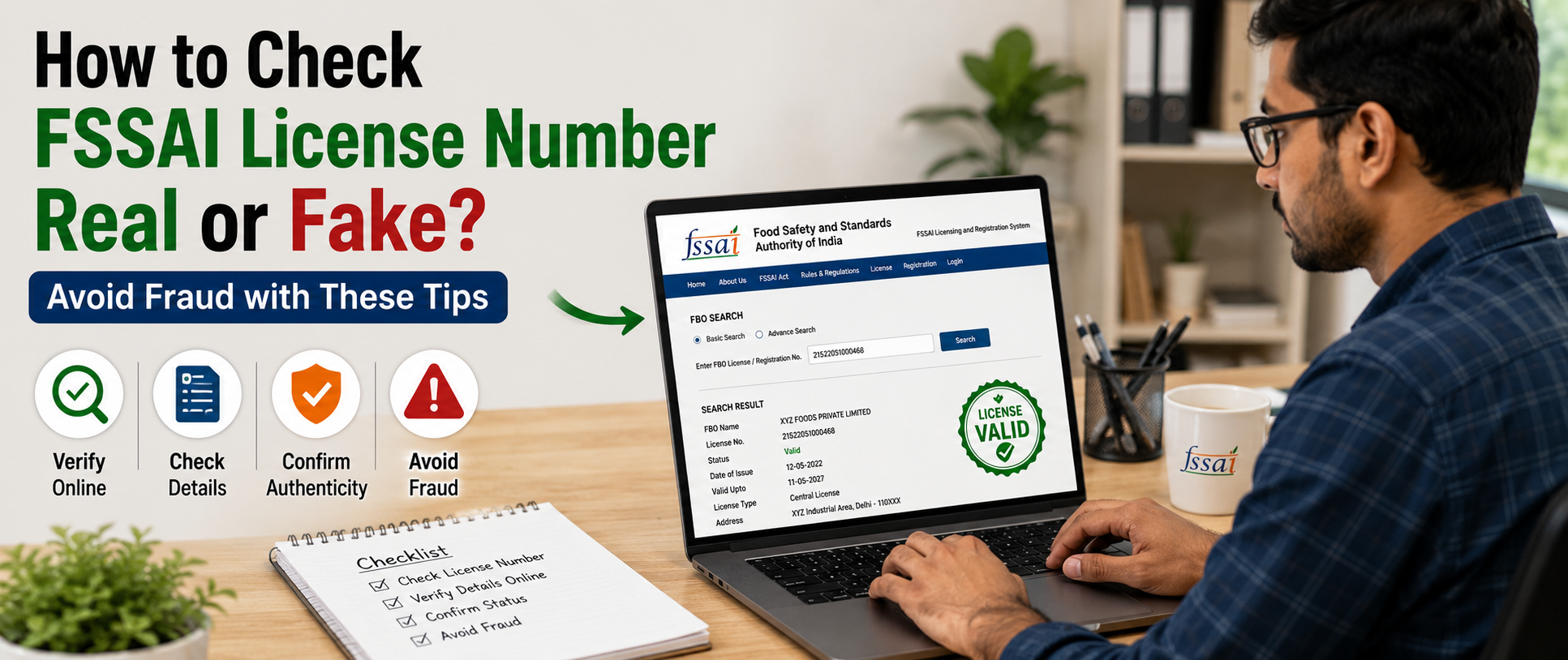
Food safety is one of the most important aspects of the food industry in India. Whether you are a food manufacturer, restaurant owner, cloud kitchen operator, wholesaler, retailer, importer, exporter, or even a consumer purchasing packaged food products, ensuring that a business holds a valid food license is essential. Many businesses display an FSSAI license number on product packaging, websites, invoices, or promotional materials. However, cases of fake registrations, expired licenses, and unauthorized use of license numbers have increased in recent years. Therefore, understanding how to check fssai license number real or fake? is crucial for avoiding fraud and ensuring compliance with food safety regulations.
A genuine FSSAI license demonstrates that a food business complies with the standards established by the Food Safety and Standards Authority of India (FSSAI). Verifying a license can help customers build trust, protect public health, and prevent financial losses caused by dealing with fraudulent businesses.
Understanding FSSAI License Numbers
The Food Safety and Standards Authority of India (FSSAI) issues a unique 14-digit license or registration number to food businesses operating across India. This number acts as an official identification code and confirms that the food business has obtained approval under the Food Safety and Standards Act, 2006. Whether it is a manufacturer, restaurant, cloud kitchen, food retailer, wholesaler, distributor, transporter, importer, exporter, or online food seller, every eligible food business operator (FBO) must obtain the appropriate FSSAI registration or license before commencing operations.
An FSSAI license number is more than just a compliance requirement. It serves as proof that the business follows food safety regulations and quality standards established by the government. The license enables regulatory authorities, consumers, suppliers, and business partners to verify the authenticity of a food business and ensure that it operates legally within the Indian food industry.
The 14-digit FSSAI license number contains important information related to the registered business. Each digit has a specific significance and helps identify various details about the food business. The license number generally includes:
· State code where the business is registered
· Year of registration or licensing
· Business registration details
· Licensing authority information
· Unique identification details assigned to the food business
Consumers can often find this number printed on packaged food products and business documents. The presence of a valid FSSAI license number helps buyers make informed purchasing decisions and increases confidence in the quality and safety of food products.
According to FSSAI regulations, every food business operator must prominently display its FSSAI license or registration number on various materials, including:
· Product packaging and food containers
· Food labels and stickers
· Business premises and shop displays
· Bills, invoices, and receipts
· Restaurant menus and food catalogs
· Company websites and digital platforms
· Online food delivery applications and marketplaces
· Promotional and marketing materials where applicable
Displaying the license number ensures transparency and allows customers to verify whether a business is legally authorized to operate. It also helps regulatory authorities track food businesses and maintain food safety standards throughout the supply chain.
Consumers should always check for the presence of a valid FSSAI license number before purchasing food products or ordering food online. If a food business fails to display its license number, provides incomplete information, or uses a suspicious registration number, customers should exercise caution and verify the details through official government channels. Taking a few minutes to verify a license can help protect against counterfeit products, food safety risks, and fraudulent businesses operating without proper authorization.
Why Is FSSAI License Verification Important?
FSSAI license verification is an essential step for ensuring food safety, legal compliance, and business transparency in India's food industry. Whether you are a consumer purchasing packaged food products, a restaurant sourcing ingredients from suppliers, or an online food delivery platform onboarding new vendors, verifying an FSSAI license helps confirm that a food business is operating legally and adhering to food safety standards established by the Food Safety and Standards Authority of India (FSSAI).
In today's competitive market, food products pass through multiple stages before reaching consumers, including manufacturing, packaging, distribution, transportation, and retail sale. Verifying the authenticity of an FSSAI license helps ensure that every participant in the food supply chain meets regulatory requirements and follows approved food safety practices. This simple verification process can significantly reduce the risk of fraud, counterfeit products, and non-compliant food businesses.
For Consumers
Consumers are the ultimate beneficiaries of food safety regulations. Before purchasing food products or ordering food online, verifying a business's FSSAI license can provide valuable assurance regarding the legitimacy of the seller.
Benefits for consumers include:
· Ensures food products come from authorized and registered businesses.
· Helps identify legitimate food manufacturers, restaurants, and retailers.
· Protects against counterfeit, adulterated, or illegally manufactured food products.
· Reduces potential health risks associated with unsafe food practices.
· Increases confidence in food quality and hygiene standards.
· Helps consumers make informed purchasing decisions.
· Provides transparency regarding the source and authenticity of food products.
· Encourages businesses to maintain compliance with food safety regulations.
When consumers actively verify food licenses, they contribute to a safer and more accountable food ecosystem.
For Business Owners
Food businesses regularly interact with suppliers, distributors, manufacturers, transporters, and retailers. Conducting license verification before entering into business relationships is an important part of risk management and compliance.
Benefits for business owners include:
· Helps verify the authenticity of suppliers and distributors.
· Prevents partnerships with unauthorized or non-compliant vendors.
· Reduces the risk of purchasing products from fraudulent businesses.
· Protects brand reputation and customer trust.
· Demonstrates commitment to food safety and regulatory compliance.
· Supports due diligence during supplier selection and procurement processes.
· Minimizes legal and operational risks associated with non-compliant partners.
· Strengthens supply chain transparency and accountability.
By verifying licenses regularly, businesses can maintain higher standards of quality control and regulatory compliance throughout their operations.
For Food Delivery Platforms
Online food delivery platforms play a major role in connecting consumers with restaurants, cloud kitchens, bakeries, and food vendors. License verification is an essential part of vendor onboarding and compliance management.
Benefits for food delivery platforms include:
· Confirms the legitimacy of restaurants, cloud kitchens, and food sellers.
· Ensures listed businesses comply with food safety regulations.
· Helps maintain consumer confidence in the platform.
· Minimizes customer complaints related to food safety concerns.
· Reduces the risk of hosting unauthorized food operators.
· Supports regulatory compliance requirements for platform operators.
· Improves transparency and accountability among food vendors.
· Helps maintain the platform's reputation and credibility in the marketplace.
A robust verification process enables food delivery platforms to offer safer and more reliable food options to customers while reducing operational and reputational risks.
Overall, FSSAI license verification serves as an important safeguard for consumers, businesses, and digital marketplaces. It promotes transparency, strengthens food safety standards, reduces fraud, and helps create a more trustworthy food industry across India.
Common Signs of a Fake FSSAI License
As awareness about food safety regulations continues to grow, many consumers and businesses have started checking FSSAI license details before purchasing products or entering into business partnerships. Unfortunately, some fraudulent operators attempt to exploit this trust by displaying fake, expired, or manipulated FSSAI license information. These businesses may use fabricated registration numbers, altered documents, or misleading packaging to create the impression that they are legally authorized to operate.
Identifying the warning signs of a fake FSSAI license can help consumers avoid unsafe food products and protect businesses from compliance risks. Before purchasing food products or working with a supplier, distributor, manufacturer, or restaurant, it is important to carefully review the license information and verify its authenticity through official channels.
Watch out for the following warning signs:
1. Invalid 14-Digit Number
An authentic FSSAI registration or license number always consists of exactly 14 digits. If the number contains fewer digits, additional digits, special characters, or unusual formatting, it may be invalid or fabricated.
Common red flags include:
· License numbers shorter than 14 digits.
· Numbers containing letters or symbols.
· Random sequences that do not follow the standard format.
· Incomplete license information on packaging or documents.
Consumers should always double-check the number and verify it through the official FSSAI portal before trusting the business.
2. Mismatch Between Business Details
One of the most common indicators of fraudulent activity is when the displayed business information does not match the details associated with the license number.
Examples include:
· Different business names.
· Incorrect addresses.
· Mismatched ownership information.
· Product categories that do not align with the registered business activity.
For example, if a license is registered to a restaurant but is being used by a packaged food manufacturer, this discrepancy should raise concerns. Any mismatch between the displayed information and official records should be investigated further.
3. Expired License
A license may have been valid at one point but is no longer active due to expiration. Some businesses continue displaying expired license numbers to appear compliant even though they have not renewed their authorization.
Signs of an expired license include:
· Past validity dates.
· Inactive license status.
· Renewal deadlines that have already passed.
· Absence of updated licensing information.
Consumers and businesses should always check the current status of a license rather than relying solely on the number printed on packaging or promotional materials.
4. Poorly Printed Packaging
Counterfeit food products often feature low-quality packaging that contains altered or poorly reproduced license details. Fraudulent operators may copy license numbers from legitimate businesses and print them on unauthorized products.
Warning signs may include:
· Blurred printing.
· Smudged text.
· Misaligned labels.
· Unclear license numbers.
· Poor-quality packaging materials.
· Visible signs of tampering or editing.
Professional food manufacturers generally use high-quality packaging with clearly visible regulatory information. Any suspicious printing should prompt additional verification.
5. Missing Registration Details
Food businesses are legally required to display their FSSAI registration or license information in a visible manner. If important details are missing, consumers should exercise caution.
Examples of missing information include:
· No FSSAI license number on packaging.
· Absence of manufacturer details.
· Missing business address.
· Incomplete labeling information.
· No registration information on websites or online listings.
Legitimate businesses typically provide complete and transparent information to customers. Missing regulatory details can indicate non-compliance or fraudulent activity.
6. Suspicious Online Listings
The rapid growth of e-commerce and online food delivery platforms has created opportunities for fraudulent sellers to operate online. Some vendors display random or stolen license numbers that do not belong to their business.
Be cautious if:
· The seller refuses to provide license information.
· License details cannot be verified.
· Business information appears inconsistent across platforms.
· Product descriptions lack transparency.
· Customer complaints mention authenticity concerns.
· Contact information is incomplete or unavailable.
Before placing large orders or establishing business relationships, verify the license information independently through official government sources rather than relying solely on information provided by the seller.
Additional Red Flags to Consider
Apart from the common warning signs listed above, consumers and businesses should also be alert to other suspicious indicators such as:
· Unusually low product prices.
· Lack of customer support information.
· Fake certification logos.
· Duplicate license numbers used by multiple businesses.
· Frequent changes in business identity.
· Refusal to provide supporting documents when requested.
By recognizing these warning signs early, consumers can avoid unsafe food products, and businesses can reduce the risk of dealing with unauthorized suppliers. A few minutes spent verifying license information can help prevent financial losses, legal complications, and potential food safety issues.
Official Methods to Verify an FSSAI License
The Food Safety and Standards Authority of India (FSSAI) has established a transparent and accessible system that allows consumers, businesses, suppliers, distributors, and regulatory authorities to verify the authenticity of food business licenses. This verification process helps ensure that food businesses operating in India comply with the requirements of the Food Safety and Standards Act and follow the necessary food safety regulations.
With the increasing number of food businesses operating both offline and online, license verification has become an important step in identifying genuine businesses and avoiding fraud. Whether you are purchasing packaged food products, selecting a supplier, onboarding a vendor, or partnering with a food manufacturer, checking the validity of an FSSAI license can help you make informed decisions.
The government provides an official online platform where anyone can search and verify the status of a food business license using the 14-digit FSSAI registration or license number. The verification system is designed to offer accurate and up-to-date information directly from government records, making it one of the most reliable methods for confirming the legitimacy of a food business.
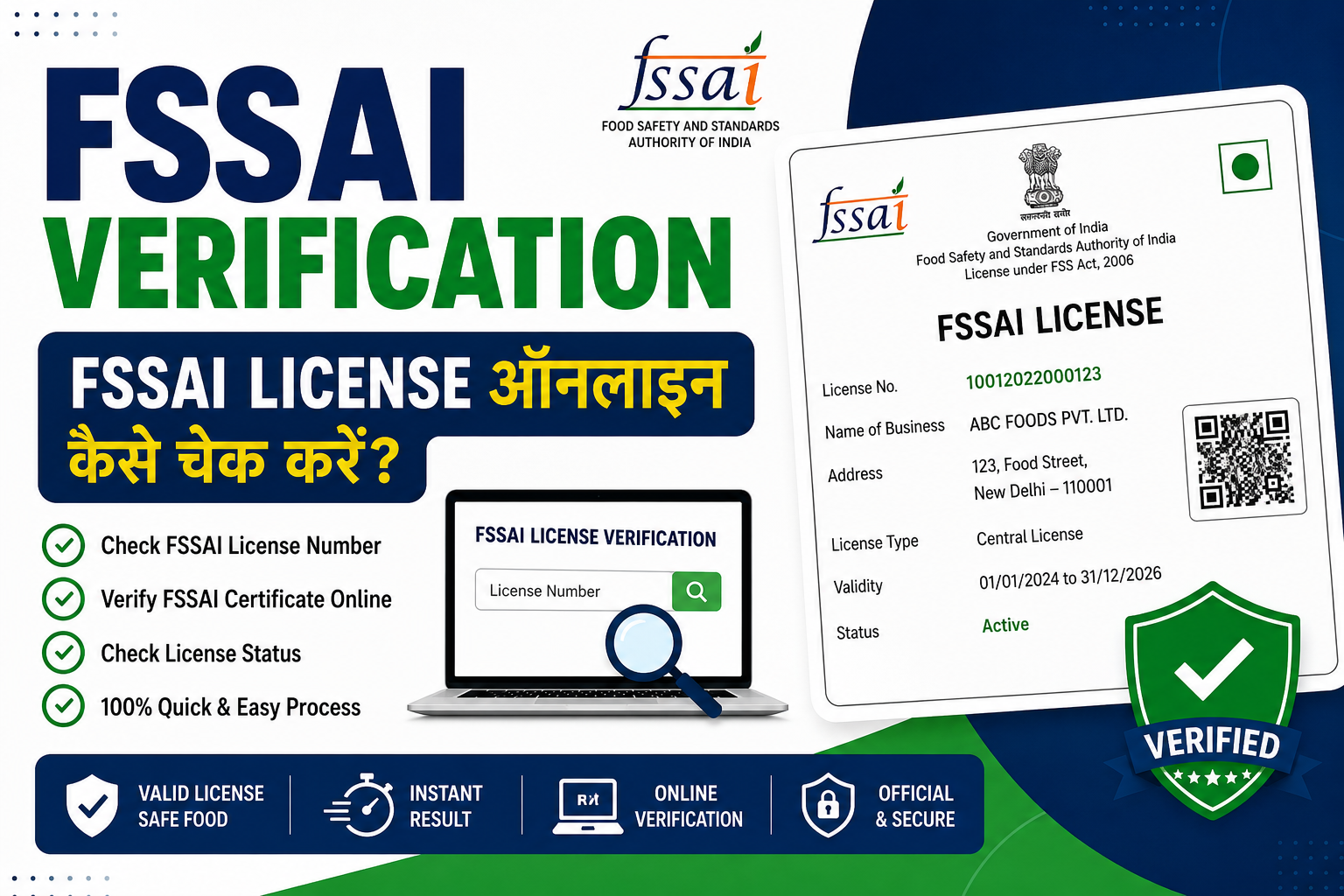
By conducting a verification check, users can access several important details related to the registered food business. These records help determine whether the business is legally authorized to operate and whether its license remains active and valid.
Information You Can Verify
The official verification portal provides access to a variety of business-related information, including:
Business Name
The portal displays the official name of the food business associated with the license number. This allows users to confirm whether the license belongs to the company, restaurant, manufacturer, retailer, distributor, or supplier claiming ownership of it.
Verifying the business name is important because fraudulent operators may use license numbers belonging to other organizations to mislead customers.
License Status
One of the most critical details displayed during verification is the current status of the license.
The status may indicate whether the license is:
· Active
· Valid
· Expired
· Suspended
· Cancelled
· Inactive
Checking the status helps users determine whether the food business is legally permitted to continue operations.
License Type
The verification system also identifies the type of registration or license issued to the business.
This may include:
· Basic Registration
· State License
· Central License
Understanding the license type helps determine whether the business falls within the appropriate licensing category based on its scale of operations and annual turnover.
Address
The registered address of the food business is another important detail available through the verification system.
Users can compare the official address with:
· Product packaging information
· Business websites
· Supplier documentation
· Invoices and bills
· Marketing materials
Any significant mismatch between the registered address and the displayed address should be investigated further.
Category of Food Business
The verification portal identifies the category under which the business is registered.
Examples include:
· Food Manufacturer
· Restaurant
· Cloud Kitchen
· Retailer
· Wholesaler
· Distributor
· Transporter
· Importer
· Exporter
· Storage Facility
This information helps determine whether the business is conducting activities that align with its registered food category.
Validity Period
The system also displays the validity period of the license, including:
· Date of issue
· Expiry date
· License duration
Checking these dates is essential because some businesses may continue displaying expired licenses even after their authorization has lapsed. A valid license should always have an active status and an unexpired validity period.
Licensing Authority
The verification results generally include details about the authority responsible for issuing the license.
This information helps users confirm that the registration was issued through the appropriate regulatory channel and is officially recognized by FSSAI.
Why These Details Matter?
Each piece of information displayed during the verification process serves a specific purpose in confirming the legitimacy of a food business. Individually, these details may seem routine, but collectively they provide a comprehensive picture of the business's compliance status.
For example, a license number may appear valid at first glance, but further verification could reveal:
· An expired license.
· A mismatched business name.
· An incorrect address.
· A different business category.
· A suspended registration status.
These discrepancies can indicate potential fraud, misuse of license information, or regulatory non-compliance.
Benefits of Using Official Verification Methods
Relying on official government verification systems offers several advantages:
· Provides accurate and updated information.
· Reduces the risk of fraud and misinformation.
· Helps consumers identify genuine food businesses.
· Supports compliance checks for businesses and suppliers.
· Enhances trust and transparency in the food industry.
· Protects public health by promoting food safety compliance.
· Enables informed purchasing and business decisions.
By reviewing all available license details carefully, consumers and businesses can confidently determine whether a food business is genuinely registered and operating under a valid FSSAI authorization. This simple verification process plays a vital role in promoting food safety, regulatory compliance, and consumer protection across the food supply chain.
Step-by-Step Process for FSSAI License Verification
Verifying an FSSAI license is a simple yet important process that helps consumers, suppliers, retailers, distributors, and food business owners confirm the authenticity of a food business. With the digitalization of food safety compliance systems in India, anyone can quickly check the validity of an FSSAI registration or license number through the official government platform.
Performing a verification check before purchasing food products, selecting suppliers, or entering into business partnerships can help prevent fraud, reduce compliance risks, and ensure that the food business is operating legally under FSSAI regulations. The process takes only a few minutes and provides valuable information about the status and legitimacy of the business.
You can complete the verification process through the official FSSAI licensing portal by following the steps below.
Step 1: Visit the Official FSSAI Licensing Portal
The first step is to access the official Food Safety Compliance System (FoSCoS) portal developed by the Food Safety and Standards Authority of India (FSSAI). This platform serves as the central online system for food business registration, licensing, renewal, modifications, and public verification services.
The official portal provides direct access to government-maintained records, ensuring that the information displayed is accurate and up to date. Users should always use the official FSSAI website rather than relying on third-party verification tools or unofficial websites, as these sources may provide outdated or incorrect information.
Before proceeding, ensure that you have the complete 14-digit FSSAI license or registration number available for verification.
Step 2: Locate the License Search Option
Once you are on the official portal, navigate to the license search or food business verification section. The platform includes a dedicated search feature that allows members of the public to verify the status of food business registrations and licenses.
This verification tool is designed for:
· Consumers checking food products.
· Retailers verifying suppliers.
· Restaurants evaluating vendors.
· Distributors reviewing manufacturers.
· Food delivery platforms onboarding sellers.
· Businesses conducting compliance checks.
The search feature is user-friendly and does not usually require account registration for basic license verification.
Step 3: Enter the 14-Digit License Number
After accessing the verification section, enter the exact 14-digit FSSAI license or registration number in the designated search field.
While entering the number, it is important to:
· Double-check all digits carefully.
· Avoid typing errors.
· Ensure no digits are missing.
· Verify the number from the product packaging or official business documents.
· Use the complete registration or license number without modifications.
Even a single incorrect digit can produce inaccurate results or prevent the system from locating the correct business record. Therefore, accuracy during data entry is essential.
Step 4: Submit the Search Request
After entering the license number, click the search, verify, or submit button provided on the portal. The system will process the information and retrieve details associated with the entered license number from the official FSSAI database.
The verification process is typically completed within a few seconds. Once the search is processed, the portal displays the available information related to the registered food business.
Users should carefully review all displayed information rather than focusing only on whether the license exists.
Step 5: Review the Verification Results
The final and most important step is to analyze the information displayed by the verification system. The portal provides several details that help determine whether the license is genuine and currently valid.
Important information to check includes:
Business Name
Confirm that the registered business name matches the company, restaurant, manufacturer, retailer, supplier, or seller whose license you are verifying.
Address
Review the registered address and compare it with the address displayed on:
· Product packaging
· Company websites
· Invoices and bills
· Business documents
· Supplier records
Any major discrepancy should be investigated further.
License Category
Verify that the business category aligns with the activities being performed by the organization.
Examples include:
· Food Manufacturer
· Retailer
· Wholesaler
· Restaurant
· Cloud Kitchen
· Importer
· Exporter
· Distributor
The category should accurately reflect the nature of the business operations.
Current License Status
One of the most critical elements to review is the current status of the license.
The status may indicate:
· Active
· Valid
· Expired
· Suspended
· Cancelled
· Inactive
Only active and valid licenses generally indicate that the business is authorized to operate under current regulations.
Expiry Date
Always review the validity period and expiry date associated with the license. A business may display a genuine license number, but if the license has expired and has not been renewed, it may no longer be compliant with regulatory requirements.
Checking the expiry date helps ensure that the authorization remains current and legally valid.
Additional Verification Tips
To improve accuracy during the verification process, consider the following best practices:
· Verify information directly from official government records.
· Compare business details across multiple sources.
· Review both the license status and expiry date.
· Verify suppliers before placing large orders.
· Check licenses periodically for long-term business relationships.
· Be cautious if business information does not match official records.
· Request supporting documents if inconsistencies are found.
What If the Details Do Not Match?
If the information displayed on the portal differs from the details provided by the business, further investigation may be necessary. Common issues include:
· Incorrect business names.
· Different registered addresses.
· Expired licenses.
· Suspended registrations.
· Mismatched business categories.
· Invalid license numbers.
In such cases, consumers and businesses should avoid making purchasing decisions or entering into partnerships until the discrepancy has been clarified.
By following these steps carefully, anyone can quickly and confidently verify the authenticity of an FSSAI license. Regular verification helps prevent fraud, promotes food safety, strengthens consumer trust, and ensures that food businesses comply with the legal requirements established by FSSAI.
How Consumers Can Verify Food Products?
Consumers play a vital role in maintaining food safety standards by making informed purchasing decisions. While government authorities regulate and monitor food businesses, consumers are often the first line of defense against counterfeit, adulterated, or illegally manufactured food products. Verifying food products before purchasing them can help reduce health risks, prevent financial losses, and encourage greater accountability within the food industry.
In today's market, food products are available through supermarkets, local stores, online marketplaces, restaurants, cloud kitchens, and food delivery applications. With so many options available, consumers should take a few simple but effective steps to confirm that the food products they purchase come from legitimate and authorized businesses.
By carefully reviewing product information and verifying business credentials, consumers can significantly reduce the risk of purchasing products from unauthorized sellers or non-compliant food businesses.
Check Product Packaging
One of the easiest ways to verify the legitimacy of a food product is by carefully examining its packaging. Genuine food products are generally required to display specific information that helps consumers identify the manufacturer and verify regulatory compliance.
Before purchasing a food product, look for the following details on the packaging:
FSSAI Logo
The FSSAI logo is commonly displayed on packaged food products manufactured or sold by registered food businesses. The logo indicates that the business falls under the food safety regulatory framework established by the Food Safety and Standards Authority of India.
Consumers should ensure that the logo appears professionally printed and is not blurred, distorted, or altered.
License Number
The packaging should clearly display the FSSAI registration or license number issued to the food business. This number enables consumers to verify the authenticity of the manufacturer or seller through official government verification systems.
When checking the license number:
· Ensure it is clearly visible.
· Confirm that all digits are readable.
· Verify that the number appears complete.
· Watch for signs of tampering or modification.
Manufacturing Details
Reliable food products generally provide detailed information about the manufacturer, including:
· Name of the company
· Manufacturing location
· Contact information
· Customer support details
These details help consumers identify the source of the product and provide an additional layer of transparency.
Expiry Information
Always review the manufacturing date, packing date, and expiry date before making a purchase.
Consumers should avoid products that:
· Have expired.
· Display unclear dates.
· Show signs of altered labeling.
· Contain missing date information.
Freshness information is an important indicator of product quality and safety.
Additional Packaging Information
Apart from the basic details listed above, consumers may also check:
· Batch number
· Net quantity
· Ingredient list
· Nutritional information
· Storage instructions
· Allergen declarations
Well-labeled products generally indicate a higher level of compliance and transparency.
Compare Business Details
Checking the information displayed on packaging is only the first step. Consumers should also compare the business details with available records whenever possible.
Important areas to review include:
Brand Name Matches Records
The brand name printed on the packaging should correspond with the business associated with the displayed license number.
Consumers should be cautious if:
· Multiple brand names appear on the same package.
· The business name differs from the brand owner.
· Company information seems inconsistent across different sources.
Verifying the brand name helps ensure that the product originates from the business claiming ownership.
Address Information Is Consistent
The address displayed on the packaging should match the registered address of the manufacturer or food business.
Consumers can compare the address with:
· Official business websites
· Product documentation
· Government verification records
· Supplier information
Significant differences in address details may indicate potential issues that require further verification.
Product Category Aligns with Business Activities
Consumers should ensure that the nature of the product matches the activities of the registered food business.
For example:
· A dairy manufacturer should produce dairy products.
· A bakery should sell bakery products.
· A restaurant license should correspond with restaurant operations.
· A food manufacturer should be registered under the appropriate food category.
If the product category does not align with the business's registered activities, consumers should investigate further before purchasing.
Verify Before Bulk Purchases
Verification becomes even more important when products are being purchased in large quantities. While individual consumers may buy a single item, businesses such as restaurants, retailers, wholesalers, distributors, and institutional buyers often purchase products in bulk.
Bulk purchases involve higher financial risks and greater responsibility for product quality and safety. Therefore, buyers should perform additional verification before finalizing transactions.
Restaurants
Restaurants should verify suppliers before purchasing ingredients, packaged foods, beverages, or raw materials.
Verification helps restaurants:
· Maintain food quality standards.
· Ensure regulatory compliance.
· Protect customer health.
· Avoid supply chain disruptions.
Retailers
Retail stores should confirm that food products originate from legitimate manufacturers and authorized distributors.
Benefits include:
· Reduced risk of counterfeit products.
· Improved customer trust.
· Better inventory quality control.
· Compliance with food safety regulations.
Distributors and Wholesalers
Distributors and wholesalers often manage large volumes of food products. Verifying suppliers before entering into long-term business relationships can help minimize legal and financial risks.
Verification supports:
· Supply chain transparency.
· Product traceability.
· Regulatory compliance.
· Business reputation management.
Additional Consumer Verification Tips
Consumers can further protect themselves by following these best practices:
· Purchase food products from reputable sellers.
· Avoid products with damaged packaging.
· Be cautious of unusually low prices.
· Verify food businesses through official government portals.
· Review customer feedback and ratings when shopping online.
· Retain purchase receipts for future reference.
· Report suspicious products to the appropriate authorities.
Why Consumer Verification Matters?
Consumer awareness is a powerful tool in promoting food safety and preventing fraud. When buyers actively verify product details and business credentials, they help create a safer and more transparent food marketplace.
Regular verification can:
· Reduce the circulation of counterfeit products.
· Encourage compliance among food businesses.
· Improve food safety standards.
· Protect public health.
· Increase consumer confidence.
By spending a few extra minutes reviewing packaging information and verifying business details, consumers can make informed purchasing decisions and contribute to a more reliable food industry.
How Businesses Can Verify Vendors and Suppliers?
Vendor and supplier verification is a critical part of maintaining a safe, compliant, and reliable food supply chain. Food businesses such as manufacturers, restaurants, cloud kitchens, retailers, wholesalers, distributors, exporters, and importers regularly depend on third-party suppliers for raw materials, ingredients, packaging materials, and finished food products. If a supplier operates without proper authorization or fails to meet food safety standards, it can expose the entire supply chain to significant risks.
Conducting proper verification before establishing a business relationship helps organizations identify legitimate vendors, reduce compliance concerns, and maintain product quality standards. In the food industry, a single mistake in supplier selection can result in legal penalties, product recalls, customer complaints, reputational damage, and financial losses. Therefore, businesses should treat supplier verification as an essential component of their risk management and quality assurance processes.
By verifying vendors and suppliers regularly, businesses can build a stronger and more transparent supply chain while ensuring compliance with food safety regulations.
Benefits of Supplier Verification
Performing due diligence before working with suppliers offers several important advantages.
Prevents Procurement Fraud
Procurement fraud is a growing concern across many industries, including the food sector. Fraudulent suppliers may provide fake licenses, counterfeit certifications, inaccurate product information, or misleading business credentials to secure contracts.
Supplier verification helps businesses:
- Confirm the authenticity of vendor information.
- Identify fake or unauthorized suppliers.
- Avoid financial losses caused by fraudulent transactions.
- Reduce the risk of counterfeit products entering the supply chain.
- Ensure that purchases are made from legitimate businesses.
By verifying suppliers before signing agreements or placing orders, organizations can significantly reduce procurement-related risks.
Protects Product Quality
Food quality directly impacts consumer safety and business reputation. Products sourced from unverified suppliers may fail to meet regulatory requirements, quality standards, or customer expectations.
Supplier verification helps ensure that vendors:
- Follow approved food safety practices.
- Maintain required hygiene standards.
- Supply products that meet quality specifications.
- Operate from authorized facilities.
- Maintain proper documentation and traceability records.
A reliable supplier network contributes to consistent product quality and improved customer satisfaction.
Reduces Compliance Issues
Food businesses are responsible for ensuring that the products they manufacture, distribute, or sell comply with applicable regulations. Working with non-compliant suppliers can create regulatory challenges and increase the likelihood of enforcement actions.
Verification helps businesses:
- Confirm legal authorization of suppliers.
- Ensure compliance with food safety regulations.
- Reduce the risk of penalties and fines.
- Improve audit readiness.
- Maintain proper compliance documentation.
Regulatory authorities may hold businesses accountable for sourcing products from unauthorized vendors, making supplier verification a critical compliance requirement.
Strengthens Supply Chain Integrity
A strong supply chain depends on transparency, accountability, and trust among all participants. Verifying suppliers helps businesses gain greater visibility into their sourcing operations and establish relationships with reliable partners.
Benefits include:
- Improved supply chain transparency.
- Better traceability of products and ingredients.
- Reduced operational disruptions.
- Stronger business relationships.
- Enhanced risk management capabilities.
- Greater confidence in supplier performance.
Organizations with verified supplier networks are often better positioned to respond to regulatory inspections, customer inquiries, and quality concerns.
Supplier Verification Checklist
To ensure effective vendor evaluation, businesses should follow a structured verification process before entering into procurement agreements or placing orders.
Request a Copy of the License
The first step is to obtain a copy of the supplier's food registration or licensing documents.
Review the document carefully and verify:
- Business name.
- License number.
- Registered address.
- Validity period.
- Type of license issued.
- Authorized business activities.
Requesting official documentation provides a foundation for further verification and helps identify potential inconsistencies.
Confirm License Validity Online
Receiving a license copy is not enough. Businesses should independently verify the license details through official government verification systems.
Online verification helps confirm:
- Whether the license is genuine.
- Current license status.
- Expiry date.
- Business registration details.
- Licensing authority information.
This step reduces the risk of accepting forged, altered, or expired documents.
Match the Registered Address
Businesses should compare the address shown on the supplier's license with other available records.
Review information from:
- Company websites.
- Business proposals.
- Product packaging.
- Purchase orders.
- Invoices and contracts.
Address inconsistencies may indicate inaccurate documentation or potential fraud. Any major discrepancy should be clarified before proceeding.
Verify the Business Category
It is important to ensure that the supplier's registered business category matches the products or services being offered.
For example:
- A food manufacturer should be registered for manufacturing activities.
- A distributor should be authorized for distribution operations.
- A retailer should hold the appropriate registration category.
- An importer should possess authorization for import activities.
Business category verification helps confirm that the supplier is legally permitted to conduct the activities for which they are being engaged.
Check Renewal and Validity Status
Licenses have specific validity periods and must be renewed periodically. Businesses should confirm that supplier licenses remain active and up to date.
Review:
- Issue date.
- Expiry date.
- Renewal status.
- Current operational status.
A supplier operating with an expired or inactive license may expose business partners to compliance and operational risks.
Additional Supplier Due Diligence Measures
Beyond basic license verification, businesses may also consider:
- Reviewing supplier reputation and market presence.
- Conducting facility inspections where feasible.
- Requesting quality assurance documentation.
- Evaluating product traceability systems.
- Assessing food safety management practices.
- Reviewing customer feedback and complaint history.
- Monitoring supplier compliance on an ongoing basis.
These additional measures can help organizations build stronger supplier relationships and improve long-term supply chain reliability.
Why Ongoing Verification Matters?
Supplier verification should not be viewed as a one-time activity. Businesses should regularly review vendor credentials, especially when entering into long-term partnerships or handling high-volume procurement activities.
Periodic verification helps organizations:
- Identify changes in compliance status.
- Monitor license renewals.
- Detect potential risks early.
- Maintain regulatory compliance.
- Protect brand reputation.
- Ensure continued product quality and safety.
A proactive supplier verification strategy enables businesses to create a more secure, compliant, and trustworthy food supply chain while minimizing operational and legal risks.
Red Flags That Require Further Investigation
A license may require deeper review if:
· Search results show “Inactive.”
· License status is expired.
· Business name differs from records.
· Address information is incorrect.
· Product category does not match operations.
These discrepancies should not be ignored.
Consequences of Using a Fake FSSAI License
Businesses operating with fake licenses may face severe penalties.
Potential Consequences
· Monetary fines
· Business suspension
· Product seizure
· Legal proceedings
· Cancellation of operations
· Damage to reputation
Consumers should avoid purchasing products from businesses that cannot provide valid registration details.
Benefits of Checking License Authenticity
Verifying the authenticity of an FSSAI license is a simple yet highly effective practice that benefits consumers, businesses, suppliers, retailers, distributors, and the food industry as a whole. In an increasingly competitive marketplace, food products move through complex supply chains before reaching consumers. As a result, ensuring that food businesses operate legally and comply with food safety regulations has become more important than ever.
Checking the authenticity of a food business license helps confirm that the business is registered with the appropriate regulatory authority and follows the standards established under food safety laws. Whether you are purchasing packaged food products, selecting a supplier, partnering with a manufacturer, or evaluating a restaurant, license verification provides valuable assurance regarding the legitimacy and compliance status of the business.
The following are some of the key benefits of verifying license authenticity.
Consumer Protection
One of the most significant benefits of license verification is the protection it provides to consumers. Food products directly impact public health, and purchasing products from unauthorized or fraudulent businesses can expose consumers to unnecessary risks.
Verification helps buyers:
· Avoid counterfeit food products.
· Identify legitimate food manufacturers and sellers.
· Reduce the risk of purchasing adulterated or substandard food items.
· Make informed purchasing decisions.
· Confirm that food products originate from authorized businesses.
· Improve confidence in the products they consume.
Consumers who verify food business credentials are better equipped to identify suspicious products and avoid businesses that may not comply with food safety standards. This additional layer of scrutiny contributes to a safer marketplace and encourages responsible business practices throughout the food industry.
Better Food Safety
Food safety is the primary objective of the regulatory framework established by the Food Safety and Standards Authority of India. Verifying a license helps ensure that food businesses are operating under approved regulations and are subject to monitoring by the relevant authorities.
Registered businesses are generally expected to:
· Follow food safety guidelines.
· Maintain hygiene and sanitation standards.
· Implement quality control procedures.
· Comply with food labeling requirements.
· Maintain proper documentation and records.
· Adhere to regulatory inspection requirements.
By verifying licenses, consumers and businesses can gain greater confidence that the products they purchase or distribute come from organizations committed to maintaining food safety standards.
Better verification practices contribute to:
· Reduced health risks.
· Improved food quality.
· Greater accountability among food businesses.
· Enhanced consumer trust in the food industry.
Increased Transparency
Transparency is essential for building trust between businesses and consumers. When a food business openly displays its registration or license details and those details can be independently verified, it demonstrates a commitment to accountability and compliance.
License verification promotes transparency by allowing stakeholders to confirm important business information such as:
· Registered business name.
· Business address.
· License status.
· Type of food business.
· Validity period.
· Regulatory authorization details.
Customers are more likely to trust businesses that provide accurate and verifiable information. Transparency also helps create stronger relationships between suppliers, distributors, retailers, and end consumers.
Benefits of increased transparency include:
· Improved customer confidence.
· Stronger brand credibility.
· Enhanced business reputation.
· Better stakeholder relationships.
· Greater public trust in food businesses.
A transparent food supply chain benefits everyone involved, from manufacturers and retailers to consumers and regulatory authorities.
Fraud Prevention
Food industry fraud can take many forms, including counterfeit products, fake licenses, unauthorized manufacturing operations, and misleading business claims. Verifying license authenticity is one of the most effective ways to identify and prevent fraudulent activities.
License verification helps:
· Detect fake or altered license numbers.
· Identify unauthorized food operators.
· Expose expired or inactive registrations.
· Prevent counterfeit products from entering the supply chain.
· Reduce procurement and sourcing risks.
· Protect businesses from fraudulent suppliers.
Fraudulent businesses often attempt to gain consumer trust by displaying fake registration details or misusing the credentials of legitimate organizations. A simple verification check can quickly reveal inconsistencies and help prevent costly mistakes.
For businesses, fraud prevention is particularly important because partnering with unauthorized suppliers can result in:
· Financial losses.
· Legal complications.
· Product recalls.
· Reputational damage.
· Regulatory penalties.
Regular verification significantly reduces these risks and promotes a more trustworthy marketplace.
Compliance Assurance
Compliance is a critical responsibility for every food business operating within the food supply chain. Manufacturers, restaurants, retailers, distributors, wholesalers, importers, and exporters must ensure that their business partners meet applicable legal and regulatory requirements.
License verification provides assurance that suppliers and vendors are operating within the established regulatory framework.
Benefits of compliance assurance include:
· Confirmation of legal authorization.
· Reduced regulatory risks.
· Improved audit readiness.
· Better documentation management.
· Enhanced supplier accountability.
· Stronger quality assurance processes.
Businesses that verify supplier licenses can more effectively demonstrate due diligence during inspections, audits, and regulatory reviews. Compliance assurance also helps organizations maintain high standards of operational integrity and reduce the likelihood of enforcement actions.
Mistakes to Avoid During Verification
Verifying an FSSAI license is a straightforward process, but many consumers, retailers, suppliers, and food business owners make common mistakes that can lead to incorrect conclusions. Even when individuals attempt to verify a food business, small errors during the verification process can result in overlooking fraudulent activities, accepting expired licenses, or trusting unauthorized operators.
To ensure accurate verification, it is important to follow the correct process and carefully review all available information. A valid-looking license number alone does not guarantee that a business is compliant or currently authorized to operate. Users must evaluate the complete set of details provided through official verification channels.
By understanding the most common verification mistakes, consumers and businesses can avoid unnecessary risks and make better-informed decisions.
Avoid These Common Verification Mistakes
Entering Incorrect Digits
One of the most frequent errors during license verification is entering an incorrect license number. Since an FSSAI license consists of 14 digits, even a single typing mistake can produce inaccurate results or prevent the system from locating the correct record.
Common data-entry mistakes include:
· Missing one or more digits.
· Entering digits in the wrong sequence.
· Accidentally adding extra numbers.
· Confusing similar-looking digits.
· Copying incorrect information from packaging or documents.
Before submitting a search request, always double-check the license number carefully to ensure it exactly matches the number displayed on the product packaging, invoice, or business documentation.
Ignoring Expiry Dates
Many people focus only on whether a license exists and overlook an equally important factor—its validity period. A business may possess a genuine license number, but if the license has expired and has not been renewed, the business may no longer be operating under valid authorization.
When reviewing verification results, always check:
· Issue date.
· Expiry date.
· Current license status.
· Renewal information.
Ignoring expiration details can result in purchasing products from businesses that are no longer compliant with regulatory requirements.
Assuming Every Printed Number Is Valid
Many consumers assume that if a license number appears on a product package, website, menu, or promotional material, it must be authentic. Unfortunately, this assumption can be risky.
Fraudulent operators may:
· Display fake license numbers.
· Use expired registration details.
· Copy license numbers belonging to other businesses.
· Alter packaging to appear legitimate.
A printed number should never be accepted as proof of authenticity without independent verification. Always confirm the information through official government records before trusting the business.
Not Matching Business Information
Another common mistake is verifying only the existence of the license number without comparing the associated business details.
When reviewing verification results, users should carefully match:
· Business name.
· Registered address.
· Business category.
· Type of license.
· Operational activities.
For example, if a license belongs to a restaurant but is being used by a packaged food manufacturer, this discrepancy should raise concerns. Similarly, differences between registered addresses and displayed business locations may indicate inaccurate or misleading information.
Verifying the complete profile of the business helps identify inconsistencies that may not be apparent from the license number alone.
Trusting Screenshots Instead of Official Records
Some businesses provide screenshots of verification results or copies of licenses as proof of compliance. While these documents may be useful for reference, they should not replace independent verification through official government platforms.
Screenshots can be:
· Edited or manipulated.
· Outdated.
· Incomplete.
· Taken before a license expired or was suspended.
Relying solely on screenshots increases the risk of accepting inaccurate information. The safest approach is to conduct a fresh verification directly through official records.
Relying on Third-Party Websites
Many unofficial websites claim to provide food business verification services. While some platforms may offer general information, they may not always contain the latest regulatory data.
Potential issues with third-party sources include:
· Outdated information.
· Incomplete records.
· Delayed updates.
· Data inaccuracies.
· Limited access to official licensing information.
Because license statuses can change due to renewals, suspensions, cancellations, or modifications, users should always prioritize information obtained directly from official government systems.
Additional Mistakes Businesses Often Make
Apart from the common errors mentioned above, organizations involved in supplier management and procurement may also encounter other verification challenges.
Examples include:
· Verifying a supplier only once and never rechecking the license.
· Failing to review supporting business documentation.
· Ignoring changes in ownership or operational structure.
· Not verifying all vendors within the supply chain.
· Assuming long-term suppliers remain compliant indefinitely.
· Overlooking discrepancies in product categories and business activities.
Regular monitoring and periodic verification help businesses maintain stronger compliance controls and reduce operational risks.
Why Accuracy During Verification Matters?
Even a minor mistake during the verification process can have significant consequences. Incorrect verification may result in:
· Purchasing counterfeit food products.
· Partnering with unauthorized suppliers.
· Regulatory compliance issues.
· Financial losses.
· Product quality concerns.
· Damage to business reputation.
· Reduced consumer trust.
For businesses, inaccurate supplier verification can create challenges during audits, inspections, and regulatory reviews. For consumers, it can increase the risk of purchasing products from unverified sources.
Online Verification vs Manual Verification
Online Verification
Advantages:
· Fast
· Accurate
· Official
· Accessible anytime
Manual Verification
Advantages:
· Useful during audits
· Allows document review
· Supports supplier due diligence
The best approach combines both methods.
Role of FSSAI License Agency in Compliance Support
Many food businesses seek professional guidance during licensing and compliance processes. FSSAI License Agency assists businesses with registration, licensing, renewals, modifications, and regulatory compliance requirements. Professional support helps organizations maintain proper documentation and avoid errors that may delay approvals or renewals.
Best Practices for Food Businesses
To maintain compliance:
· Renew licenses before expiry.
· Update business information promptly.
· Display license numbers clearly.
· Maintain food safety records.
· Conduct supplier verification regularly.
· Train staff on compliance requirements.
These practices reduce regulatory risks and strengthen consumer trust.
Digital Transformation in FSSAI Compliance
India's food compliance system has become more transparent through digital platforms.
Benefits include:
· Faster verification
· Reduced paperwork
· Improved transparency
· Better regulatory oversight
· Easier public access to information
Food businesses can now complete most compliance activities online.
Consumer Awareness and Food Safety
Consumer awareness plays a significant role in strengthening food safety standards.
When customers routinely verify food business credentials:
· Fraudulent operators are exposed.
· Compliance levels improve.
· Product quality increases.
· Food safety culture becomes stronger.
Simple verification steps can significantly reduce risks associated with counterfeit or unauthorized food products.
Conclusion
Verifying a food business license is one of the easiest ways to protect yourself from fraud and ensure food safety compliance. Whether you are a customer, retailer, distributor, restaurant owner, or food manufacturer, taking a few minutes to confirm license authenticity can prevent financial losses and health risks. By using official government verification systems, checking business details carefully, and staying alert to warning signs, anyone can confidently determine how to check fssai license number real or fake? and make informed decisions when purchasing or partnering with food businesses.
FAQs
1. What is an FSSAI license number?
An FSSAI license number is a unique 14-digit identification number issued to food businesses registered under food safety regulations in India.
Source: https://www.fssai.gov.in/
2. Why is an FSSAI license important?
It confirms that a food business complies with food safety standards and legal requirements.
Source: https://www.fssai.gov.in/
3. How can I verify a food business license?
You can use the official FoSCoS portal to check license details using the 14-digit number.
Source: https://foscos.fssai.gov.in/
4. What should I do if a license number is invalid?
Avoid purchasing products or conducting business until authenticity is confirmed.
Source: https://www.fssai.gov.in/
5. Can consumers verify food licenses?
Yes, consumers can verify license information using public verification tools.
Source: https://foscos.fssai.gov.in/
6. What information appears after verification?
Business name, address, status, category, and validity period.
Source: https://foscos.fssai.gov.in/
7. Is FSSAI verification free?
Yes, public license verification is available free of cost.
Source: https://foscos.fssai.gov.in/
8. What is FoSCoS?
FoSCoS is the Food Safety Compliance System used for licensing and registration.
Source: https://foscos.fssai.gov.in/
9. How many digits are in an FSSAI license number?
An FSSAI license number contains 14 digits.
Source: https://www.fssai.gov.in/
10. Can an expired license still be displayed?
Some businesses may display expired licenses, which should be verified before use.
Source: https://www.fssai.gov.in/
11. What is the difference between registration and license?
Registration is generally for smaller businesses, while licenses apply to larger operations.
Source: https://www.fssai.gov.in/
12. Can online food sellers have FSSAI licenses?
Yes, eligible online food businesses must obtain required registration or licensing.
Source: https://www.fssai.gov.in/
13. Why should retailers verify suppliers?
Supplier verification reduces compliance and quality risks.
Source: https://www.fssai.gov.in/
14. Is FSSAI mandatory for food businesses?
Yes, food businesses generally require registration or licensing under applicable regulations.
Source: https://www.fssai.gov.in/
15. What happens if a business uses a fake license?
It may face penalties, legal action, and business restrictions.
Source: https://www.fssai.gov.in/
16. Can restaurants verify supplier licenses?
Yes, supplier verification is recommended for compliance purposes.
Source: https://foscos.fssai.gov.in/
17. How often should businesses check supplier licenses?
Periodic verification is recommended, especially before major purchases.
Source: https://www.fssai.gov.in/
18. Can imported food products be checked?
Yes, importers must comply with food safety regulations.
Source: https://www.fssai.gov.in/
19. What should I verify besides the number?
Check business name, address, category, and validity.
Source: https://foscos.fssai.gov.in/
20. Are cloud kitchens required to obtain FSSAI approval?
Yes, applicable registration or licensing requirements apply.
Source: https://www.fssai.gov.in/
21. How long is an FSSAI license valid?
Validity depends on the approved period selected during application.
Source: https://foscos.fssai.gov.in/
22. Can a license be renewed?
Yes, licenses can be renewed before expiry.
Source: https://foscos.fssai.gov.in/
23. What is a central FSSAI license?
It is issued to businesses meeting central licensing criteria.
Source: https://www.fssai.gov.in/
24. What is a state FSSAI license?
It is issued to businesses operating under state licensing criteria.
Source: https://www.fssai.gov.in/
25. Can manufacturers verify distributors?
Yes, businesses should verify all supply chain partners.
Source: https://www.fssai.gov.in/
26. Why should consumers check food licenses?
Verification helps ensure authenticity and food safety.
Source: https://www.fssai.gov.in/
27. What if business details do not match?
Further investigation should be conducted before proceeding.
Source: https://foscos.fssai.gov.in/
28. Can mobile food vendors obtain FSSAI registration?
Yes, eligible vendors must comply with registration requirements.
Source: https://www.fssai.gov.in/
29. Does FSSAI verification improve consumer trust?
Yes, verified businesses appear more credible and transparent.
Source: https://www.fssai.gov.in/
30. Where can I perform an official license search?
Official verification can be completed through the FoSCoS portal using the license number.
Source: https://foscos.fssai.gov.in/