Food safety is one of the most important aspects of public health. Every day, millions of people consume packaged foods, restaurant meals, beverages, dairy products, bakery items, and other food products. To ensure that these food items are safe and meet quality standards, the Government of India has established a regulatory authority known as FSSAI.
Many entrepreneurs, restaurant owners, food manufacturers, cloud kitchens, home-based food businesses, and online food sellers often search for the FSSAI full form and its importance. If you are planning to start a food-related business in India, understanding FSSAI registration is essential.
This detailed guide explains the FSSAI full form, objectives, functions, registration process, license types, fees, benefits, required documents, and frequently asked questions.
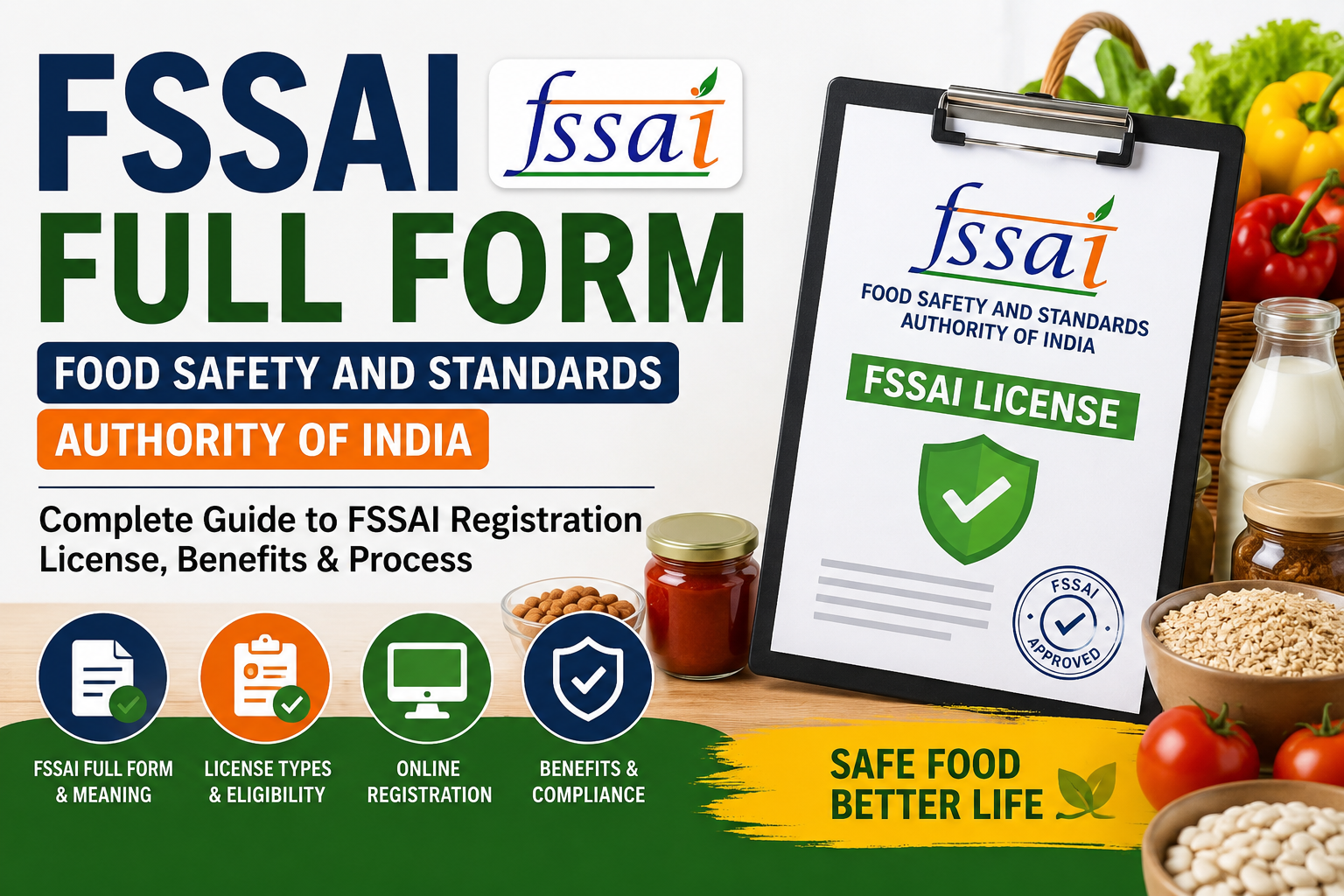
What is the Full Form of FSSAI?
FSSAI Full Form is Food Safety and Standards Authority of India.
It is an autonomous body established under the Ministry of Health and Family Welfare, Government of India.
The authority is responsible for regulating and supervising food safety standards across the country. Its primary objective is to ensure that food products available to consumers are safe, hygienic, and meet quality standards.
About FSSAI
The Food Safety and Standards Authority of India was established under the Food Safety and Standards Act, 2006.
Before the formation of FSSAI, multiple laws and authorities regulated food safety in India. To create a single unified system, the government introduced the Food Safety and Standards Act.
Today, FSSAI acts as the central authority responsible for:
- Food safety regulations
- Food quality standards
- Food business licensing
- Food product approvals
- Consumer awareness
- Food testing and monitoring
Every food business operator (FBO) must obtain the required FSSAI license before commencing operations.
Why is FSSAI Important?
Food safety directly impacts public health. Unsafe food can lead to serious health issues such as food poisoning, infections, and long-term diseases.
FSSAI ensures:
- Safe food production
- Quality control
- Consumer protection
- Hygienic food handling
- Compliance with food laws
- Standardized food products
Without proper regulation, consumers may face risks from adulterated or contaminated food products.
Objectives of FSSAI
The main objectives of FSSAI include:
1. Ensuring Food Safety
FSSAI establishes standards for food products to ensure consumer safety.
2. Regulating Food Businesses
It regulates food manufacturers, distributors, retailers, importers, and exporters.
3. Preventing Food Adulteration
FSSAI monitors food quality and takes action against adulterated products.
4. Promoting Consumer Awareness
The authority educates consumers about safe food practices.
5. Developing Food Standards
It develops scientific standards for food products and ingredients.
Functions of FSSAI
FSSAI performs several critical functions.
Setting Food Standards
It establishes quality standards for:
-
Milk products
-
Bakery products
-
Meat products
-
Beverages
-
Packaged foods
-
Nutritional supplements
Issuing Licenses
FSSAI grants food licenses and registrations to food businesses.
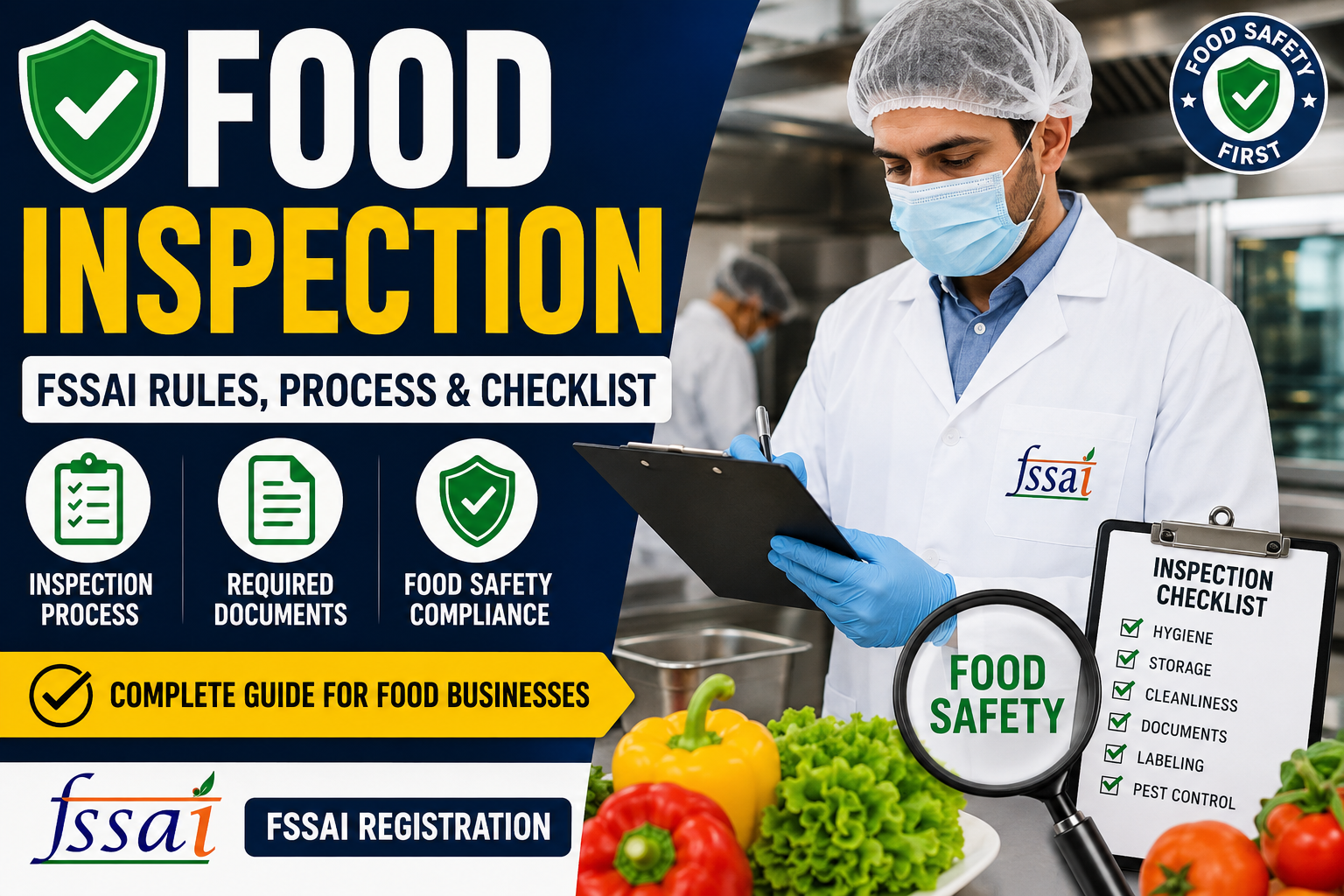
Conducting Inspections
Regular inspections ensure compliance with food safety regulations.
Food Testing
Food samples are tested in accredited laboratories.
Monitoring Food Imports
Imported food products are checked for safety and compliance.
Consumer Awareness Campaigns
FSSAI conducts awareness programs regarding food safety.
Who Needs FSSAI Registration?
Any individual or organization involved in food-related activities generally requires FSSAI registration.
Examples include:
- Restaurants
- Cafes
- Food stalls
- Cloud kitchens
- Home kitchens
- Food manufacturers
- Food processors
- Food distributors
- Food wholesalers
- Food retailers
- Food importers
- Food exporters
- Dairy businesses
- Bakery businesses
- Online food sellers
Even small food vendors may need basic FSSAI registration.
Types of FSSAI License
FSSAI provides three major categories of registration and licenses.
1. Basic FSSAI Registration
This registration is suitable for small food businesses.
Eligibility
Businesses with annual turnover up to ₹12 lakh.
Examples
-
Small food vendors
-
Home kitchens
-
Small retailers
-
Petty food manufacturers
2. State FSSAI License
This license is required for medium-sized food businesses.
Eligibility
Businesses with annual turnover between ₹12 lakh and ₹20 crore.
Examples
-
Medium restaurants
-
Food manufacturers
-
Storage units
-
Transporters
3. Central FSSAI License
Large businesses require a Central License.
Eligibility
Businesses with annual turnover above ₹20 crore.
Examples
-
Large manufacturers
-
Importers
-
Exporters
-
E-commerce food operators
-
Large restaurant chains
Benefits of FSSAI Registration
Obtaining an FSSAI license offers several benefits.
Builds Consumer Trust
Customers prefer businesses that follow food safety regulations.
Legal Compliance
FSSAI registration ensures compliance with Indian food laws.
Business Expansion
An FSSAI license helps businesses expand nationally and internationally.
Improved Brand Reputation
Licensed businesses appear more professional and reliable.
Easier Loan Approval
Banks and financial institutions often prefer compliant businesses.
Better Market Opportunities
Many retailers and marketplaces require FSSAI certification.
Documents Required for FSSAI Registration
The required documents depend on the type of registration.
Common documents include:
- Aadhaar Card
- PAN Card
- Passport-size photograph
- Business address proof
- Rent agreement (if applicable)
- Utility bill
- Partnership deed
- GST certificate
- Incorporation certificate
- Food safety management plan
Additional documents may be required depending on the business type.
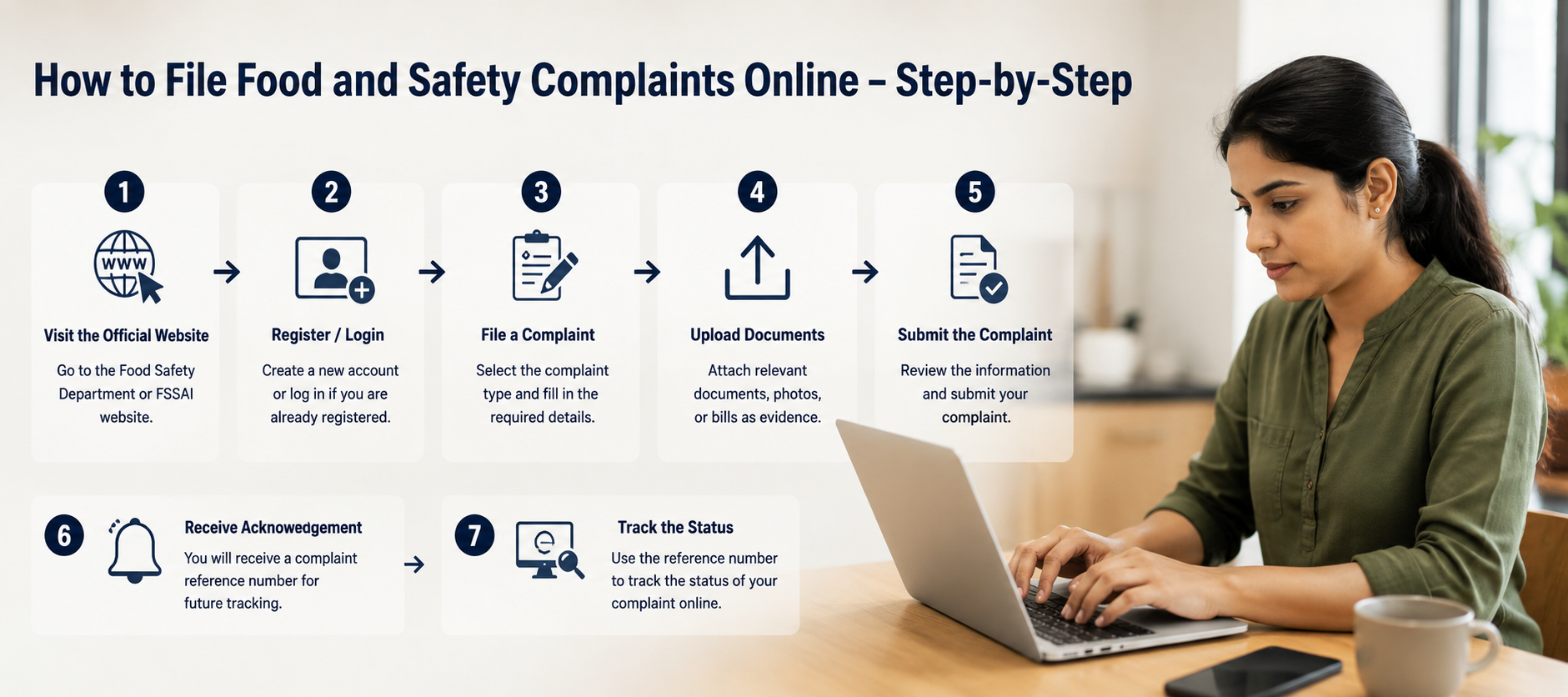
How to Apply for FSSAI Registration Online?
The registration process is simple and can be completed online.
Step 1: Determine License Type
Identify whether you need:
- Basic Registration
- State License
- Central License
Step 2: Prepare Documents
Collect all required documents.
Step 3: Fill Application Form
Submit the appropriate FSSAI application.
Step 4: Upload Documents
Upload scanned copies of supporting documents.
Step 5: Pay Fees
Pay the applicable registration fee.
Step 6: Verification
Authorities review the application.
Step 7: License Approval
After successful verification, the FSSAI certificate is issued.
FSSAI Registration Fees
The fees vary depending on the license category.
Basic Registration
Approximately ₹100 per year.
State License
Generally between ₹2,000 and ₹5,000 per year.
Central License
Usually between ₹7,500 and ₹10,000 per year.
Professional assistance charges may apply separately.
Validity of FSSAI License
An FSSAI license can be issued for:
- 1 year
- 2 years
- 3 years
- 4 years
- 5 years
Businesses can choose validity based on their requirements.
Longer validity periods reduce renewal hassles.
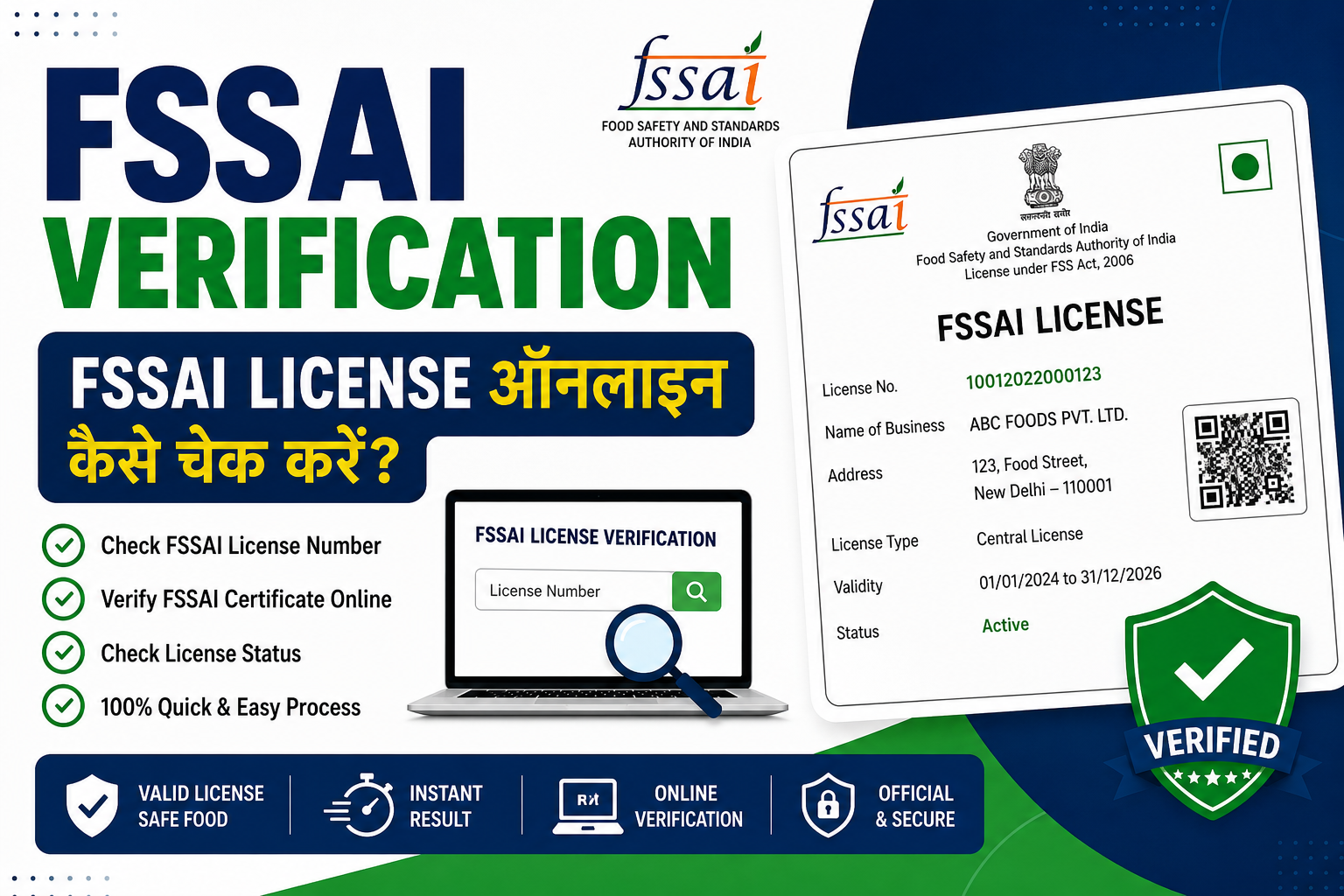
FSSAI Logo and License Number
After obtaining registration, businesses receive:
- FSSAI license number
- Registration certificate
The license number must be displayed on:
- Food packaging
- Product labels
- Bills and invoices
- Business premises
Displaying the FSSAI logo helps increase customer confidence.
Penalties for Non-Compliance
Operating a food business without an FSSAI license can lead to penalties.
Possible consequences include:
- Heavy fines
- Business suspension
- License cancellation
- Legal action
- Product seizure
Therefore, obtaining proper registration is essential.
Common Mistakes During FSSAI Registration
Many applicants make errors that delay approval.
Choosing the Wrong License
Selecting an incorrect category can result in rejection.
Incomplete Documents
Missing documents cause delays.
Incorrect Business Details
Providing inaccurate information may lead to application rejection.
Late Renewal
Failure to renew licenses on time can attract penalties.
Why Food Startups Need FSSAI Registration
India's food startup ecosystem is growing rapidly.
Food startups benefit from:
- Legal recognition
- Customer trust
- Marketplace approval
- Better business opportunities
- Easier expansion
Whether operating a cloud kitchen or food delivery service, FSSAI registration is crucial.
FSSAI for Home-Based Food Businesses
Many people start food businesses from home.
Examples include:
- Homemade pickles
- Bakery products
- Tiffin services
- Catering services
Such businesses generally require Basic FSSAI Registration if turnover remains within the prescribed limit.
FSSAI for Online Food Sellers
Businesses selling food through online platforms must comply with FSSAI regulations.
Examples include:
- Amazon sellers
- Flipkart sellers
- Swiggy partners
- Zomato partners
Most platforms require valid FSSAI registration before onboarding.
Future of Food Safety in India
Food safety standards continue to evolve.
FSSAI is focusing on:
- Digital licensing
- Food traceability
- Better inspections
- Consumer awareness
- Stronger enforcement
These initiatives will improve food quality across India.
Conclusion
The FSSAI Full Form is Food Safety and Standards Authority of India. It plays a vital role in ensuring food safety and maintaining quality standards throughout the country.
Whether you run a restaurant, bakery, food manufacturing unit, cloud kitchen, home-based food business, or online food store, obtaining the appropriate FSSAI registration is essential. It not only ensures legal compliance but also builds trust among consumers and strengthens your brand reputation.
By understanding the registration process, license categories, benefits, and compliance requirements, food business operators can confidently establish and grow their businesses in India.
FAQs
1. What is the full form of FSSAI?
FSSAI stands for Food Safety and Standards Authority of India.
2. Is FSSAI registration mandatory?
Yes, most food businesses in India require FSSAI registration or a license.
3. Who issues FSSAI licenses?
The Food Safety and Standards Authority of India issues FSSAI registrations and licenses.
4. What is the validity of an FSSAI license?
The validity ranges from 1 to 5 years, depending on the selected option.
5. Can a home kitchen get FSSAI registration?
Yes, home-based food businesses can obtain Basic FSSAI Registration.
6. What is the fee for Basic FSSAI Registration?
The government fee is generally around ₹100 per year.
7. Can I apply for FSSAI registration online?
Yes, the application process can be completed online.
8. Is FSSAI required for online food selling?
Yes, online food sellers generally need FSSAI registration.
9. What happens if I operate without FSSAI?
You may face penalties, fines, and legal action.
10. Does FSSAI improve customer trust?
Yes, an FSSAI license demonstrates compliance with food safety standards and improves credibility.