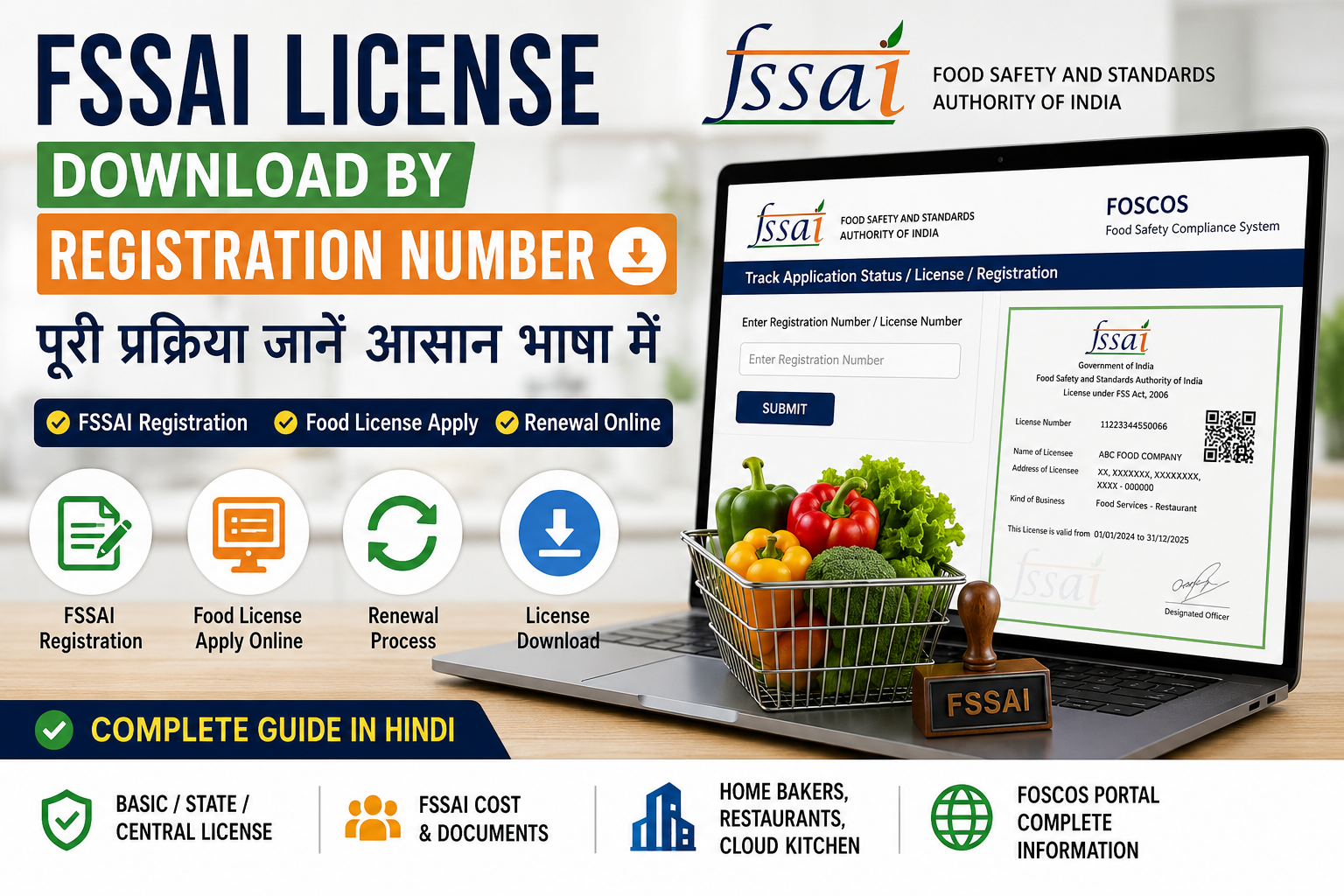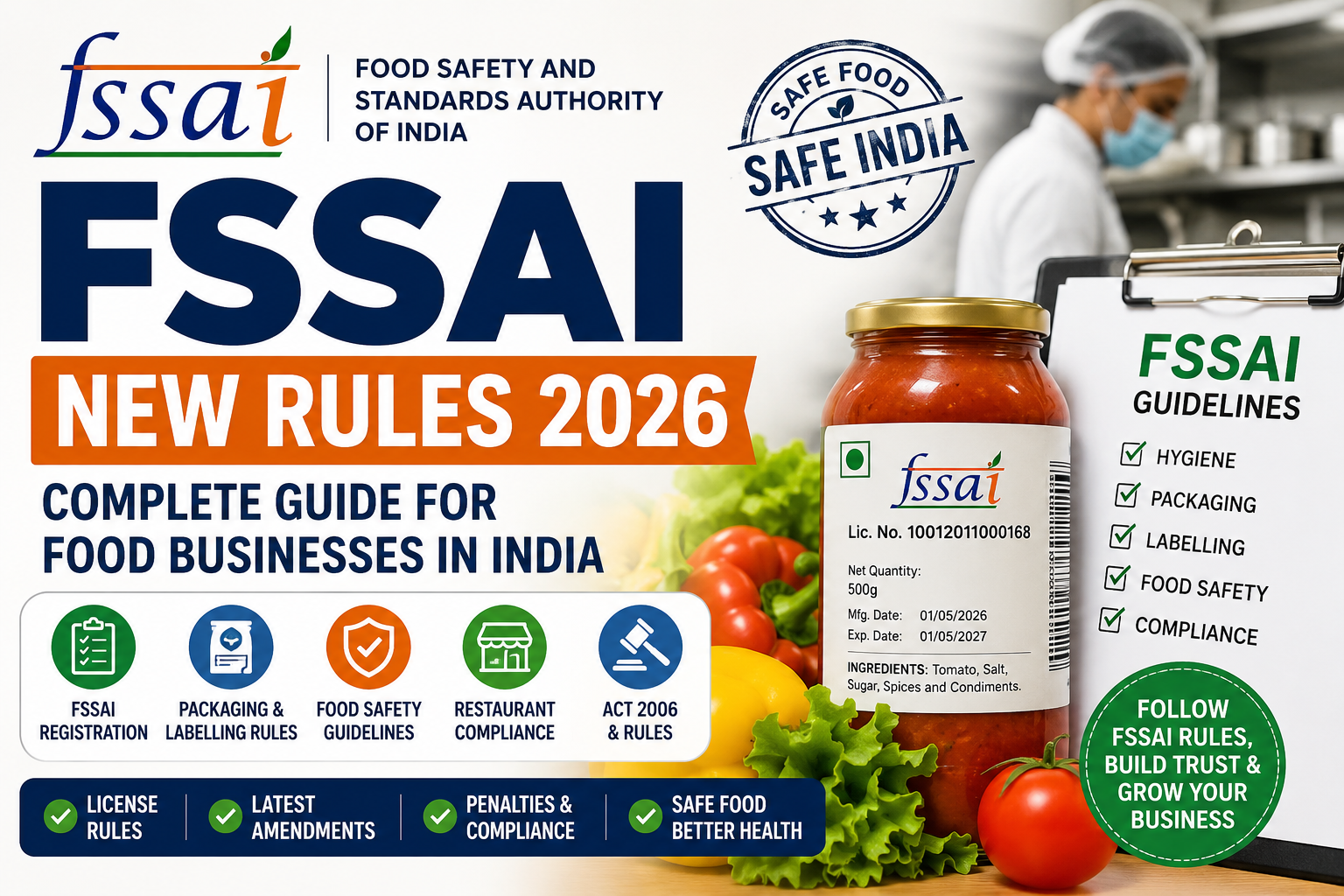
Food safety has become one of the most important concerns in India’s growing food industry. Whether you run a restaurant, cloud kitchen, food manufacturing unit, grocery store, bakery, or online food business, following FSSAI rules and regulations and obtaining proper FSSAI registration is mandatory. Food Safety and Standards Authority of India regularly updates its guidelines to improve food quality, hygiene, packaging, labelling standards, and food safety compliance across the country.
In this detailed guide, we will explain the latest FSSAI new rules, FSSAI registration process, FSSAI packaging and labelling regulations, FSSAI license rules, restaurant guidelines, and the Food Safety and Standards Act 2006 in simple language.
What is FSSAI?
Food Safety and Standards Authority of India is the main food regulatory authority in India. It works under the Ministry of Health & Family Welfare and ensures that food products sold in India are safe for consumers.
FSSAI regulates:
- Food manufacturing
- Food storage
- Distribution
- Import/export
- Packaging
- Labelling
- Restaurant hygiene
- Food delivery businesses
Every food business operator (FBO) must follow FSSAI guidelines for food safety and obtain the required Food license or registration.
Food Safety and Standards Act 2006
The Food Safety and Standards Act 2006 is the primary law governing food safety in India. This act replaced multiple older food laws and created a single authority to regulate the food industry.
The main objectives of the act are:
- Ensuring safe food for consumers
- Standardizing food quality
- Regulating food manufacturing
- Preventing adulteration
- Improving food hygiene standards
- Protecting public health
The Food Safety and Standards Act 2006 and Rules 2011 provide complete legal guidelines for food businesses operating in India.
Importance of FSSAI Rules and Regulations
Following FSSAI rules is important for both businesses and consumers.
Benefits for Businesses
- Builds customer trust
- Improves food quality
- Prevents legal penalties
- Increases brand credibility
- Helps in online food delivery partnerships
- Supports business expansion
Benefits for Consumers
- Safe and hygienic food
- Proper food information
- Better product quality
- Reduced health risks
- Protection from adulterated products
FSSAI New Rules 2026
FSSAI regularly updates food safety regulations to meet modern industry standards. Here are some important FSSAI new regulations and guidelines businesses should know.
Mandatory Hygiene Rating for Restaurants
FSSAI has strengthened hygiene standards for restaurants, hotels, cafes, and cloud kitchens.
Key Requirements
- Clean kitchen environment
- Safe cooking practices
- Staff hygiene training
- Pest control management
- Proper waste disposal
- Safe water usage
Restaurants are encouraged to display hygiene ratings to build consumer confidence.
FSSAI Guidelines for Kitchen
Important kitchen guidelines include:
- Use clean utensils
- Separate raw and cooked food
- Maintain refrigerator temperature
- Wear gloves and hair covers
- Regular sanitization
These FSSAI guidelines for restaurants help reduce contamination risks.
New FSSAI Packaging Rules
Packaging plays an important role in food safety. FSSAI packaging and labelling regulations ensure that food remains safe during storage and transportation.
FSSAI Guidelines for Food Packaging
Food packaging materials must:
- Be food-grade quality
- Prevent contamination
- Avoid chemical leakage
- Protect food freshness
- Be properly sealed
Businesses must avoid using harmful plastic materials that may affect food quality.
FSSAI New Rules for Packaging
The latest FSSAI packaging regulations focus on:
- Sustainable packaging
- Reduced plastic usage
- Eco-friendly materials
- Safe storage containers
- Tamper-proof packaging
These new FSSAI regulations are especially important for online food delivery businesses.
FSSAI Labelling Regulations
Food labels help consumers understand what they are buying. The FSSAI labelling regulations require businesses to provide clear and accurate information.
Mandatory Label Information
According to FSSAI packaging and labelling regulations, labels must include:
- Product name
- Ingredients list
- Nutritional information
- Manufacturing date
- Expiry date
- Veg/non-veg logo
- FSSAI license number
- Net quantity
- Storage instructions
FSSAI Labeling Regulations 2021 & 2022
The FSSAI labelling regulations 2021 and FSSAI labeling regulations 2022 introduced stricter transparency rules.
Major Changes
- Clear font size requirements
- Better nutritional information
- Front-of-pack labelling discussions
- Declaration of allergens
- Added sugar disclosure
- High fat/salt/sugar identification
These changes aim to improve consumer awareness and healthier food choices.
Food Safety and Standards Packaging and Labeling Regulations 2011
The Food Safety and Standards Packaging and Labeling Regulations 2011 provide the legal framework for food labels in India.
These regulations cover:
- Packaging standards
- Label design
- Product claims
- Ingredient declarations
- Advertisement restrictions
Non-compliance can lead to penalties or license cancellation.
FSSAI License Rules and Regulations
Every food business in India must obtain the appropriate FSSAI registration or license.
Types of FSSAI Licenses
Basic Registration
For small food businesses with turnover below the prescribed limit.
State License
For medium-sized food businesses operating within one state.
Central License
For large manufacturers, importers, exporters, and businesses operating across multiple states.
Rules for FSSAI License
To obtain an FSSAI license, businesses must:
- Maintain hygiene standards
- Submit required documents
- Follow food safety regulations
- Use approved packaging
- Display license number properly
Failure to follow FSSAI license rules may result in penalties.
FSSAI Registration Guidelines
The FSSAI registration process generally includes:
- Application submission
- Document verification
- Inspection (if required)
- Approval process
- License issuance
Documents Required
- Aadhaar card
- PAN card
- Business address proof
- Food category details
- Passport-size photo
- Business registration certificate
FSSAI Guidelines for Food Safety
Food safety is the core objective of FSSAI regulations.
Key Food Safety Guidelines
- Maintain proper hygiene
- Use clean raw materials
- Monitor food temperature
- Avoid cross-contamination
- Ensure employee cleanliness
- Conduct regular inspections
Food businesses should also train employees in safe food handling practices.
FSSAI Guidelines for Restaurants
Restaurants and food service businesses must follow strict operational guidelines.
Important Restaurant Rules
- Use safe cooking oil
- Maintain kitchen cleanliness
- Store food correctly
- Display FSSAI license
- Ensure staff hygiene
- Avoid food adulteration
Cloud kitchens and online delivery kitchens must also comply with these rules.
FSSAI Rules for Packaging
FSSAI packaging rules focus on consumer health and environmental sustainability.
Packaging Material Standards
Approved materials include:
- Food-grade plastic
- Glass containers
- Paper-based packaging
- Aluminium foils
- Biodegradable materials
Packaging must not transfer harmful substances into food products.
FSSAI New Packaging Regulations
The new packaging regulations emphasize:
- Eco-friendly packaging
- Reduced single-use plastic
- Safe takeaway containers
- Proper sealing standards
Food delivery businesses should ensure that packaging prevents leakage and contamination.
FSSAI Renewal Rules
FSSAI licenses are not permanent and require food licenses renewal before expiry.
Important Renewal Guidelines
- Apply before expiration date
- Update business information
- Maintain compliance records
- Continue hygiene standards
Late renewal may attract penalties or suspension.
Penalties for Violating FSSAI Rules
Businesses that fail to follow FSSAI rules and regulations may face:
- Monetary penalties
- Product recalls
- License suspension
- Business closure
- Legal action
Serious food safety violations can result in imprisonment under Indian food laws.
Common Mistakes Food Businesses Should Avoid
Many businesses unknowingly violate FSSAI guidelines.
Common Compliance Errors
- Incorrect labelling
- Missing expiry dates
- Poor kitchen hygiene
- Unapproved packaging
- Expired licenses
- Improper storage conditions
Regular audits can help businesses stay compliant.
Benefits of Following FSSAI Guidelines
Better Brand Reputation
Consumers trust businesses that follow proper food safety standards.
Increased Customer Confidence
Clear labelling and hygienic practices improve customer satisfaction.
Business Expansion Opportunities
FSSAI compliance helps businesses partner with:
- Online delivery platforms
- Retail chains
- Export markets
- Supermarkets
FSSAI Rules in Hindi
Many small business owners search for FSSAI rules in Hindi to better understand compliance requirements.
Important topics commonly searched include:
- FSSAI license rules
- Packaging guidelines
- Restaurant regulations
- Food labelling requirements
- Kitchen hygiene standards
Understanding these regulations helps businesses avoid penalties and maintain legal operations.
Future of FSSAI Regulations in India
India’s food industry is rapidly evolving, and FSSAI continues to introduce new regulations to improve food safety.
Future focus areas may include:
- Digital food traceability
- Stronger nutritional labelling
- Sustainable packaging
- Organic food certification
- Online food delivery compliance
- AI-based food safety monitoring
Businesses that stay updated with new FSSAI rules will have a competitive advantage.
Conclusion
FSSAI rules and regulations are essential for maintaining food safety and consumer trust in India. Whether you operate a restaurant, cloud kitchen, food manufacturing unit, or packaged food business, complying with the Food Safety and Standards Act 2006 and FSSAI guidelines is mandatory.
The latest FSSAI new rules focus heavily on:
- Food hygiene
- Safe packaging
- Transparent labelling
- Sustainable practices
- Consumer awareness
Businesses that follow FSSAI packaging and labelling regulations, maintain hygiene standards, and renew licenses on time can build a strong reputation and avoid legal complications.
Keeping up with FSSAI new regulations is not only important for compliance but also for long-term business growth in India’s competitive food industry.
FAQs on FSSAI New Rules
1. What is FSSAI in India?
Food Safety and Standards Authority of India regulates food safety, hygiene, packaging, and licensing standards in India.
2. What is the full form of FSSAI?
FSSAI stands for Food Safety and Standards Authority of India.
3. Where is the FSSAI headquarters located?
FSSAI headquarters is located in New Delhi.
4. When was FSSAI established?
FSSAI was established under the Food Safety and Standards Act, 2006.
5. What are FSSAI rules and regulations?
FSSAI rules regulate food safety, packaging, labelling, hygiene, manufacturing, and licensing in India.
6. What are the latest FSSAI amendments?
Recent amendments focus on food labelling, packaging standards, hygiene rules, and nutritional transparency.
7. How to obtain FSSAI certification?
You can apply online through the official FSSAI registration portal by submitting documents and fees.
8. How to check FSSAI licence number?
You can verify the 14-digit FSSAI licence number on the official FSSAI website.
9. What are the three types of FSSAI licenses?
The three types are Basic Registration, State License, and Central License.
10. Is FSSAI registration free?
Basic registration has minimal government fees, while State and Central licences require official charges.
11. What is the FSSAI complaint number?
Consumers can file complaints through the FSSAI helpline or grievance portal.
12. What are the 4 rules of food safety?
The four basic rules are Clean, Separate, Cook, and Chill.
13. What are the 5 C’s of food safety?
The 5 C’s are Cleaning, Cooking, Cross-contamination prevention, Chilling, and Compliance.
14. What is the 2 hour 4 hour rule for food safety?
Food kept outside for under 2 hours is safe, while food kept over 4 hours should be discarded.
15. Can I sell on Zomato without FSSAI?
No, most sellers on Zomato require a valid FSSAI licence.
16. Is home bakery legal in India?
Yes, home bakery businesses are legal with proper FSSAI registration and hygiene compliance.
17. What are FSSAI packaging and labelling regulations?
These regulations define standards for food packaging, expiry dates, ingredient lists, and nutritional labels.
18. What are FSSAI license renewal rules?
FSSAI licences must be renewed before expiry to avoid penalties or suspension.